zERO LATENCY,
NEW ORLEANS
Project Contributions & Collaboration:
Spatial Planning & Interior Wall Layouts
3D Renderings
Main Hallway Accent Lighting Design
Vendor Coordination
Construction Documentation
FF&E Sourcing & Selection
Value Engineering
Construction Administration Support
Site Walks & Punch Visit
Programs Utilized:
Revit
Enscape
AutoCAD
PhotoShop
Google Reviews:
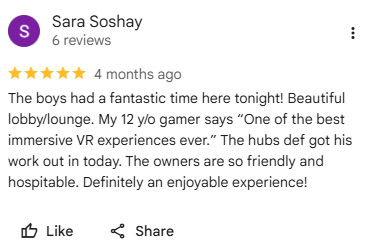
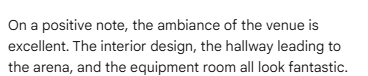
Here is an excerpt from a well thought out, constructive review about gameplay; however, they noted no notes for the interior!
Zero Latency was so much fun to work on and my first themed-entertainment project that I got to see from beginning to end. The project manager and principal of Within Studio, Florencia DeRoussel, gave me a lot of creative freedom and allowed me to have a great amount of input on the project. Her guidance was immeasurable, and I was so thrilled to collaborate with her and be given the opportunity to contribute so much.
Even though I started this project as an intern, I was given a lot of responsibility and treated as Florencia’s right hand, leading meetings, taking the reins on interior narratives, and producing all of the interior renderings for the facility alongside architect Daren Sadowsky, who developed the architectural shell and then turned it over for me to push the interiors into the post-apocalyptic world we had envisioned.
When I first started at Within, this was the first project I was assigned and my main focus throughout my entire internship. I told them I could do interior renderings in Revit and Enscape, which they needed at the time since no one else in the firm specialized in that workflow aside from our impressive Jordan Gillispie, who was focused on other projects. So I was essentially turned loose into the rendering world.
I quickly realized that, as a student, I still had a lot to learn about producing work at a client-ready level. I say I worked 9–5 at this internship, but honestly, I would go home and sneak back on and treat the summer like rendering boot camp. I knew I could push my renderings to a higher level of professionalism than I had learned so far, so I basically gave myself my own crash course through YouTube tutorials and Autodesk forums and just kept improving.
This project never felt like work to me, and I’m really glad I got to be part of this team.
Fun fact: the Zero Latency page includes a detail about me. I did, in fact, listen to the soundtrack daily, Nat King Cole and Frank Sinatra made it hard not to.
The Building Blocks - Schematic Design & Narrative
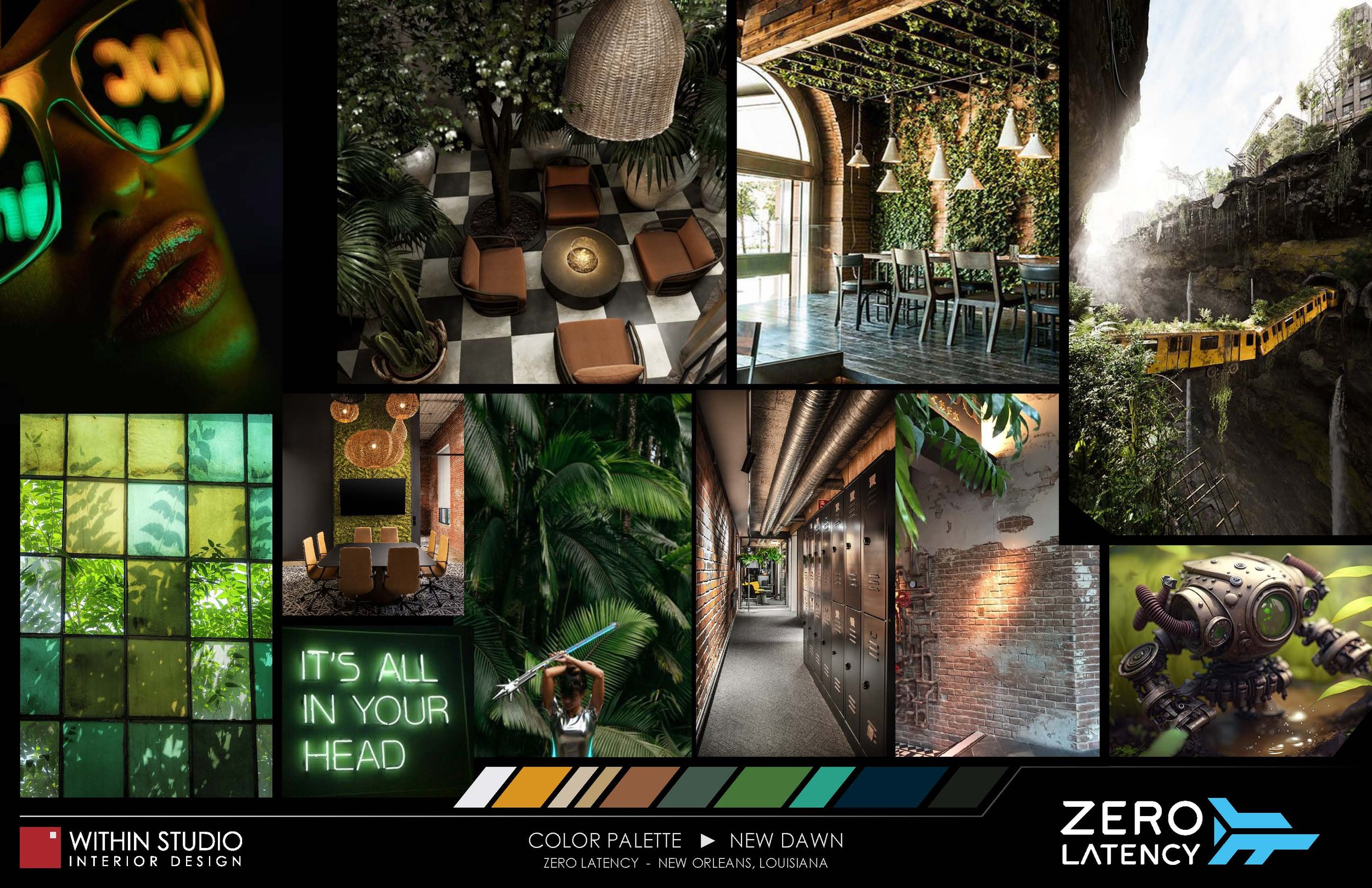
We presented two schematic concepts to the client.
The first concept was one in which New Orleans is taken over and transformed into a wild frontier, ruled by sentient plant life that has combined with man's invention of artificial intelligence. Computers are given a body through flora, and chaos reigns amongst the dilapidated remains of the French city.
Our second concept leans into the modernization of the city. Many years in the future, the bustle of New Orleans takes on a cyberpunk tone. Full of circuitry and calculated neon accents, guests come to battle on the cliffside of the cutting edge.
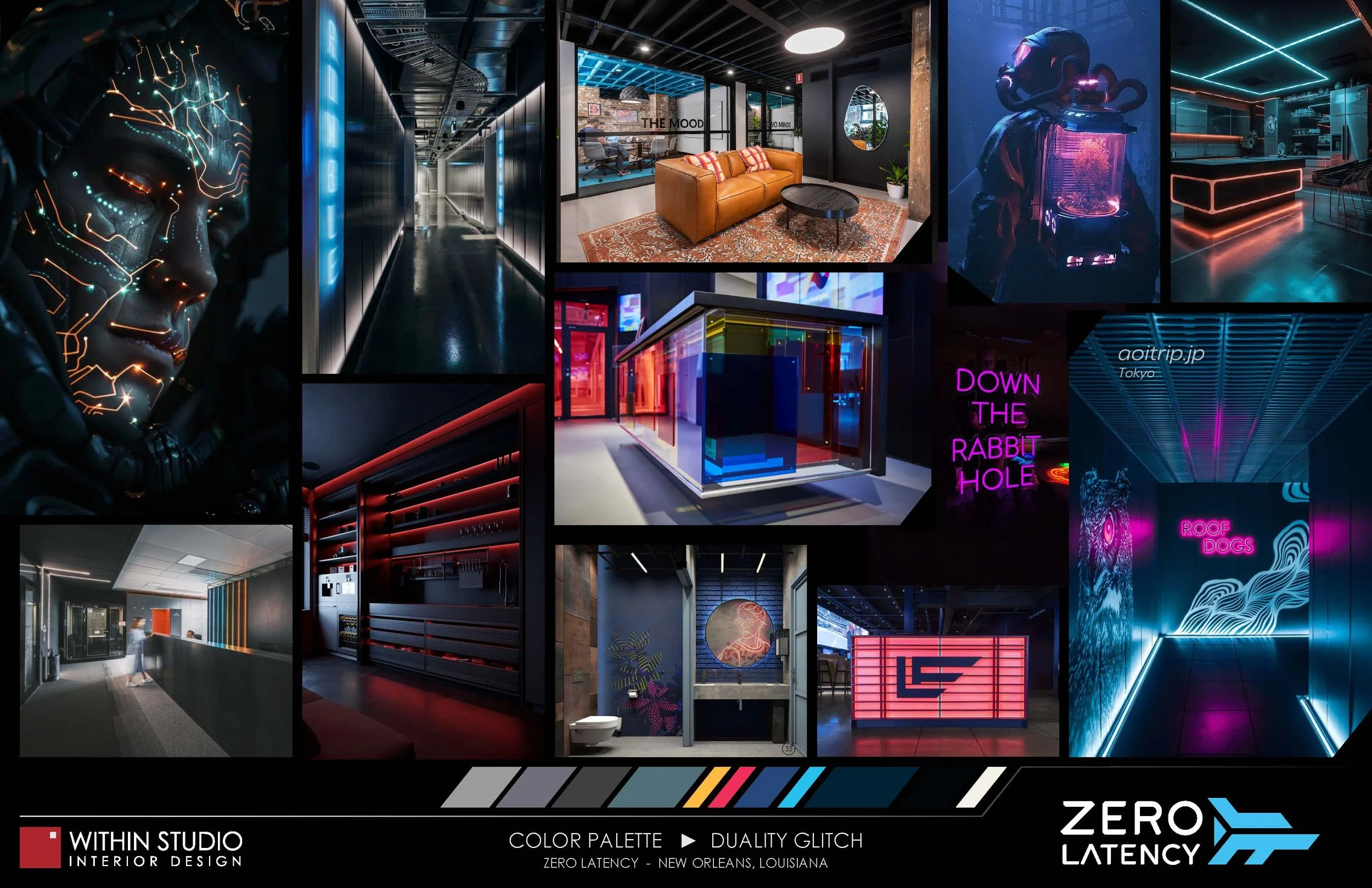
DESIGN DEVELOPMENT - FF&E SOURCING
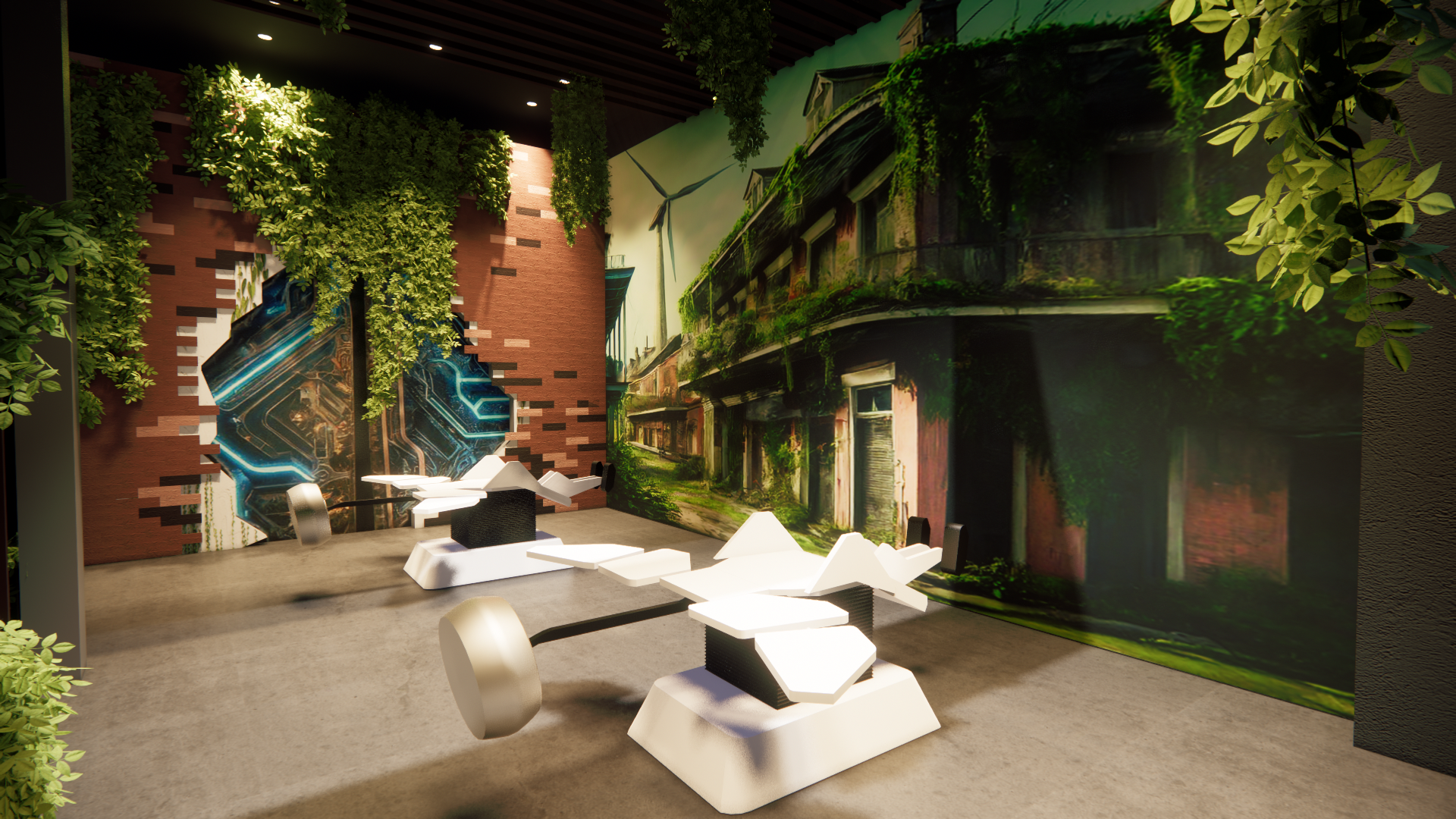
As the client liked both presented color schemes and conceptual directions, an overgrown, chaotic ecosystem and a sleek, futuristic New Orleans, we had to construct a material environment that considered both stories. Therefore, we re-wrote our original concept into a narrative in which the artificial plant intelligence, attempting to eliminate the players, has successfully taken over the front of the facility. Faux plants teem out of every rustic nook and cranny of a New Orleans neighborhood.
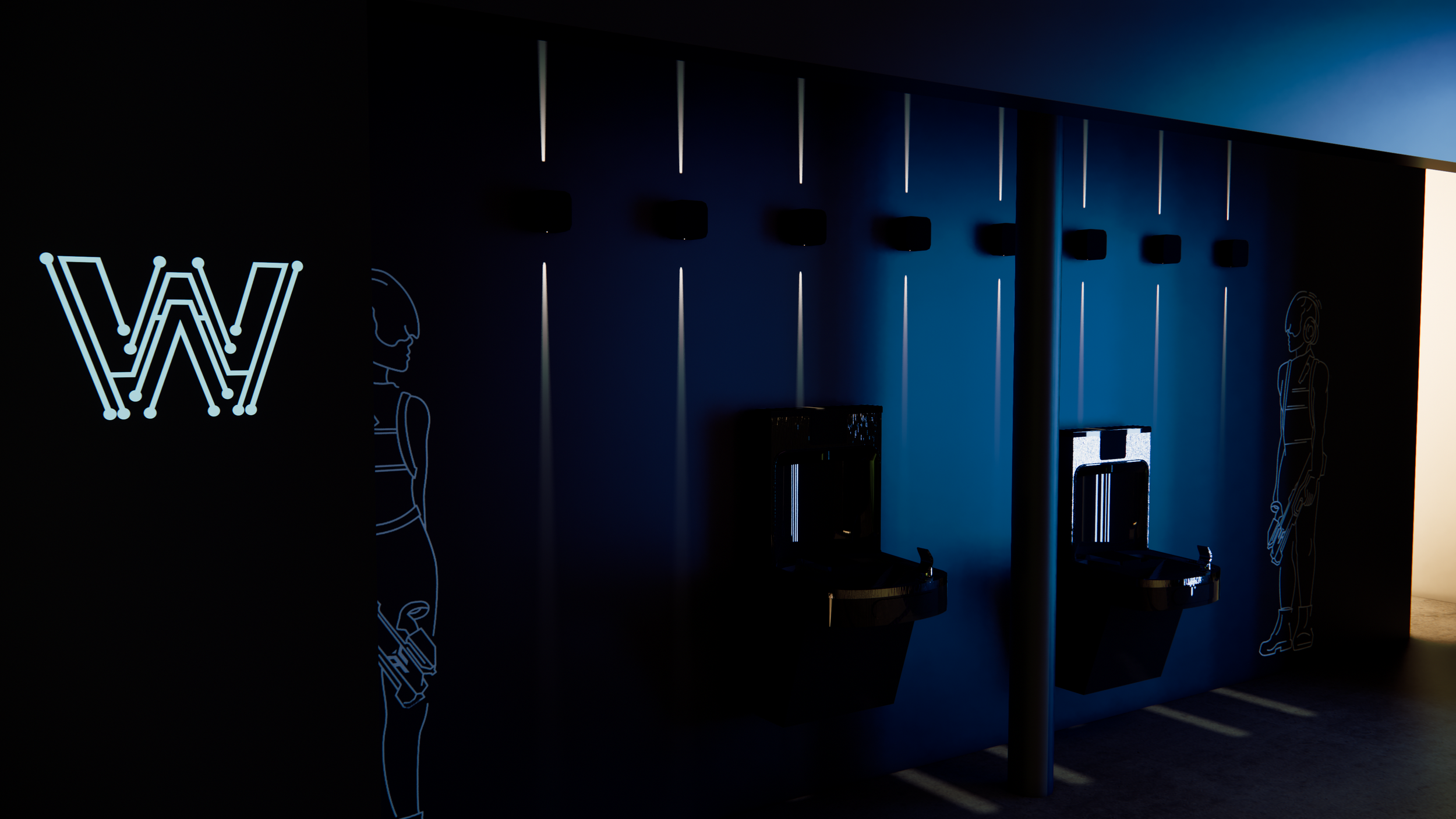
Towards the back, humankind counters, with finishes that give an impression of prestige and advancement through unrusted steel panelling and strict blue vinyl circuitry. Here, the plants are stalemated on the exterior, confused by a protective transparent barrier, but presenting an ever-looming danger that is visually present, though contained.
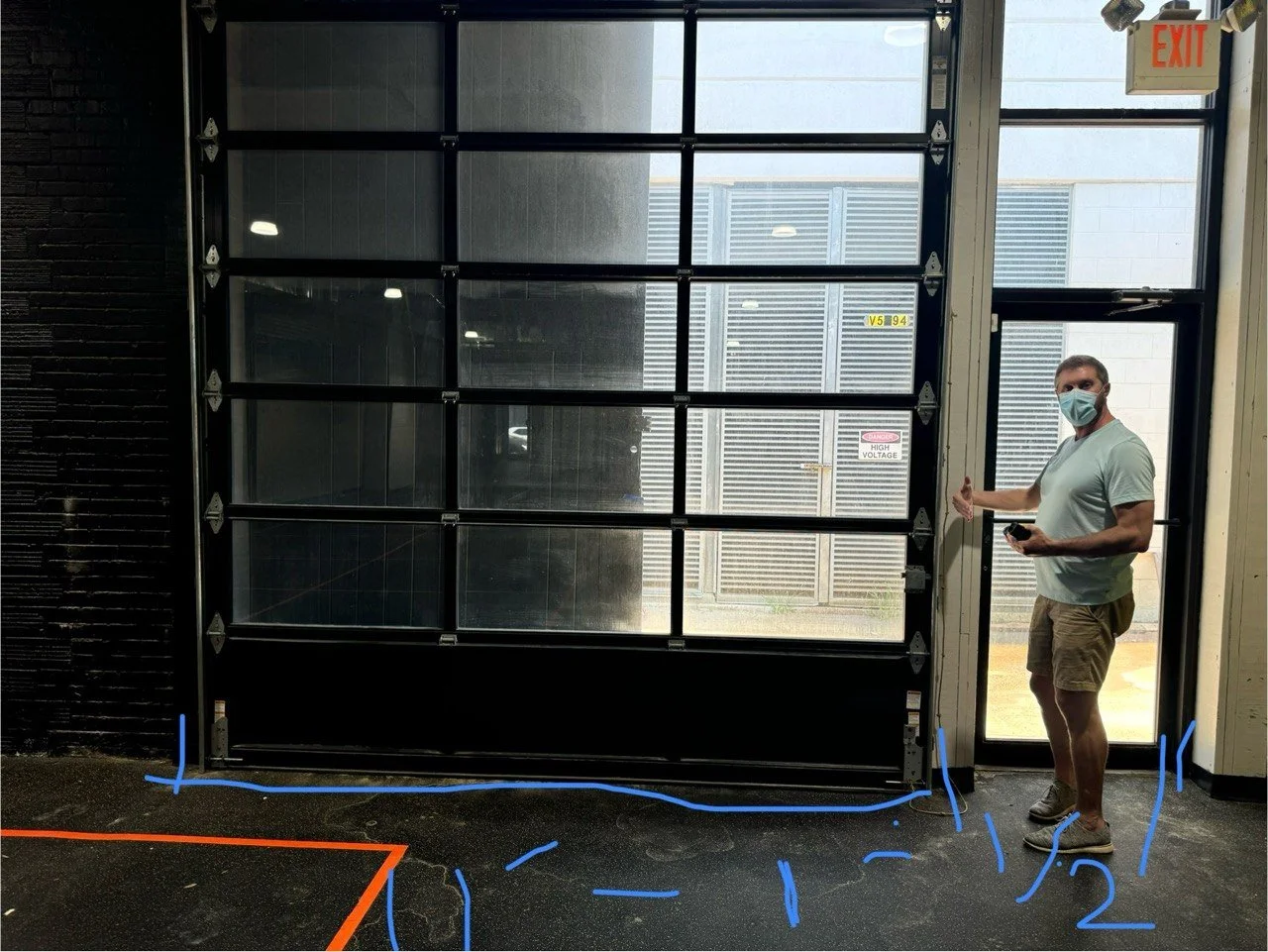
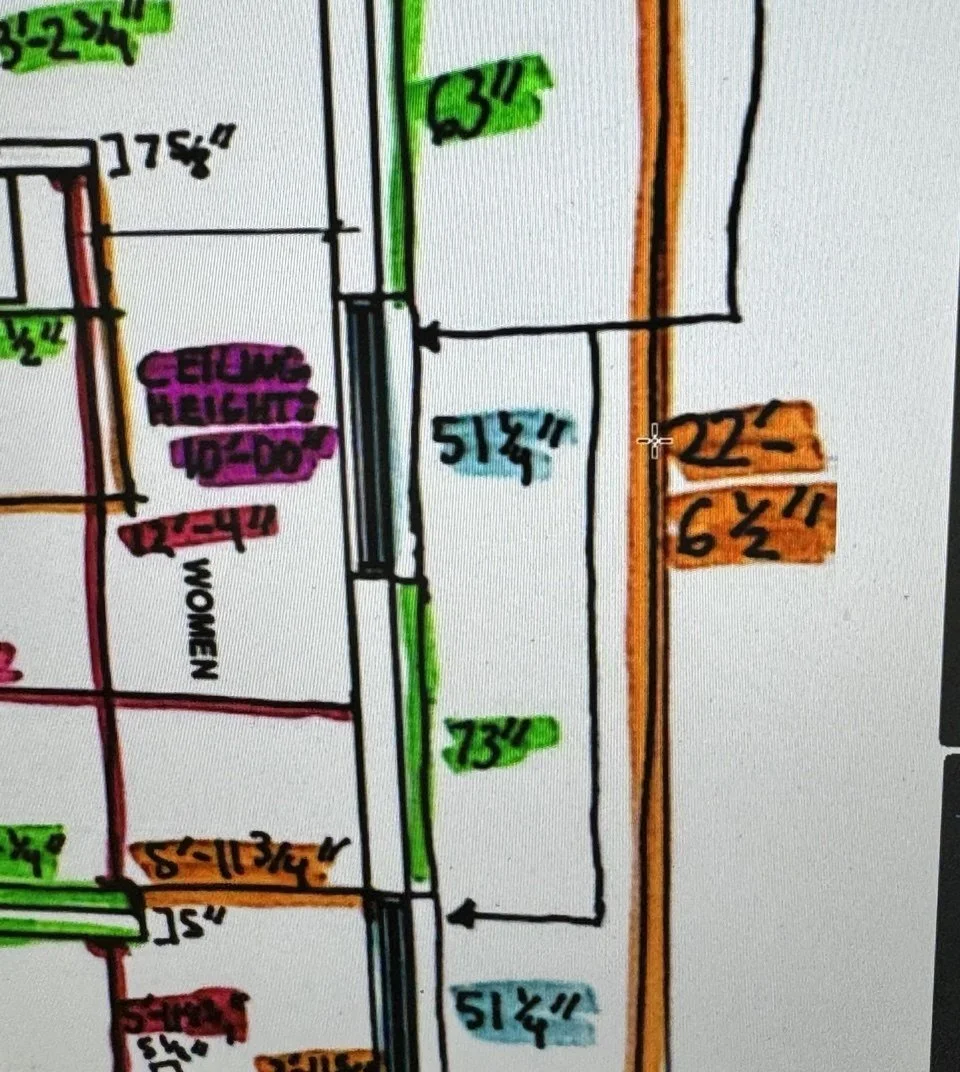
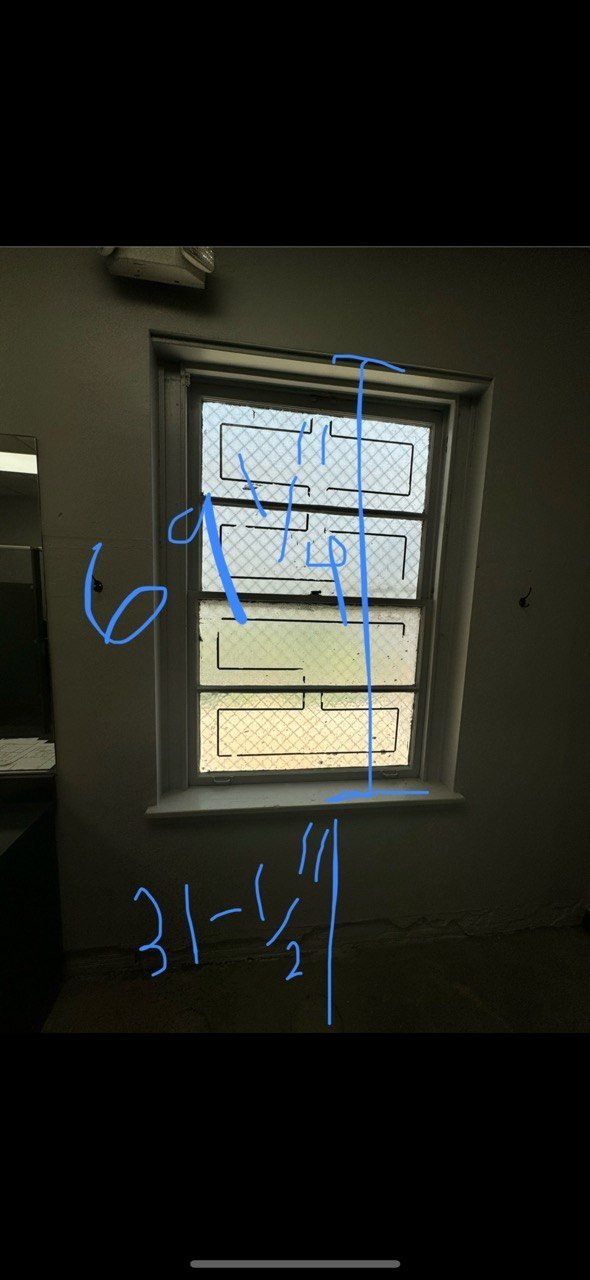
site visits and permiting
In addition to attending site visits, I had the opportunity to observe an important part of the permitting process by attending a city forum.
Local business owners and community leaders shared their perspectives on the proposed VR arena and its impact on the neighborhood. It was a valuable experience that provided insight into how public forums operate and the diverse viewpoints of different community demographics.
DESIGN DEVELOPMENT - 3d visualization
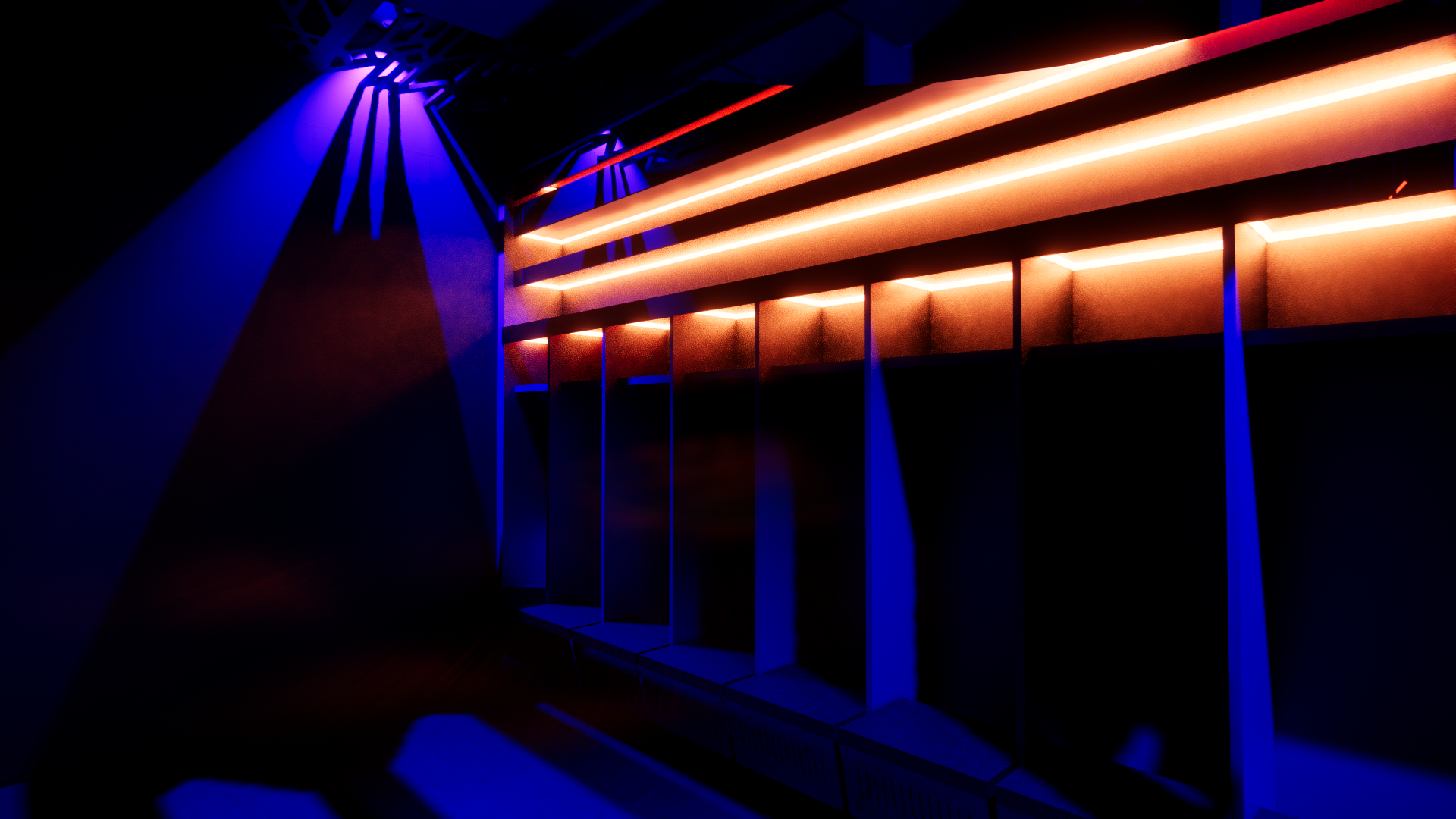
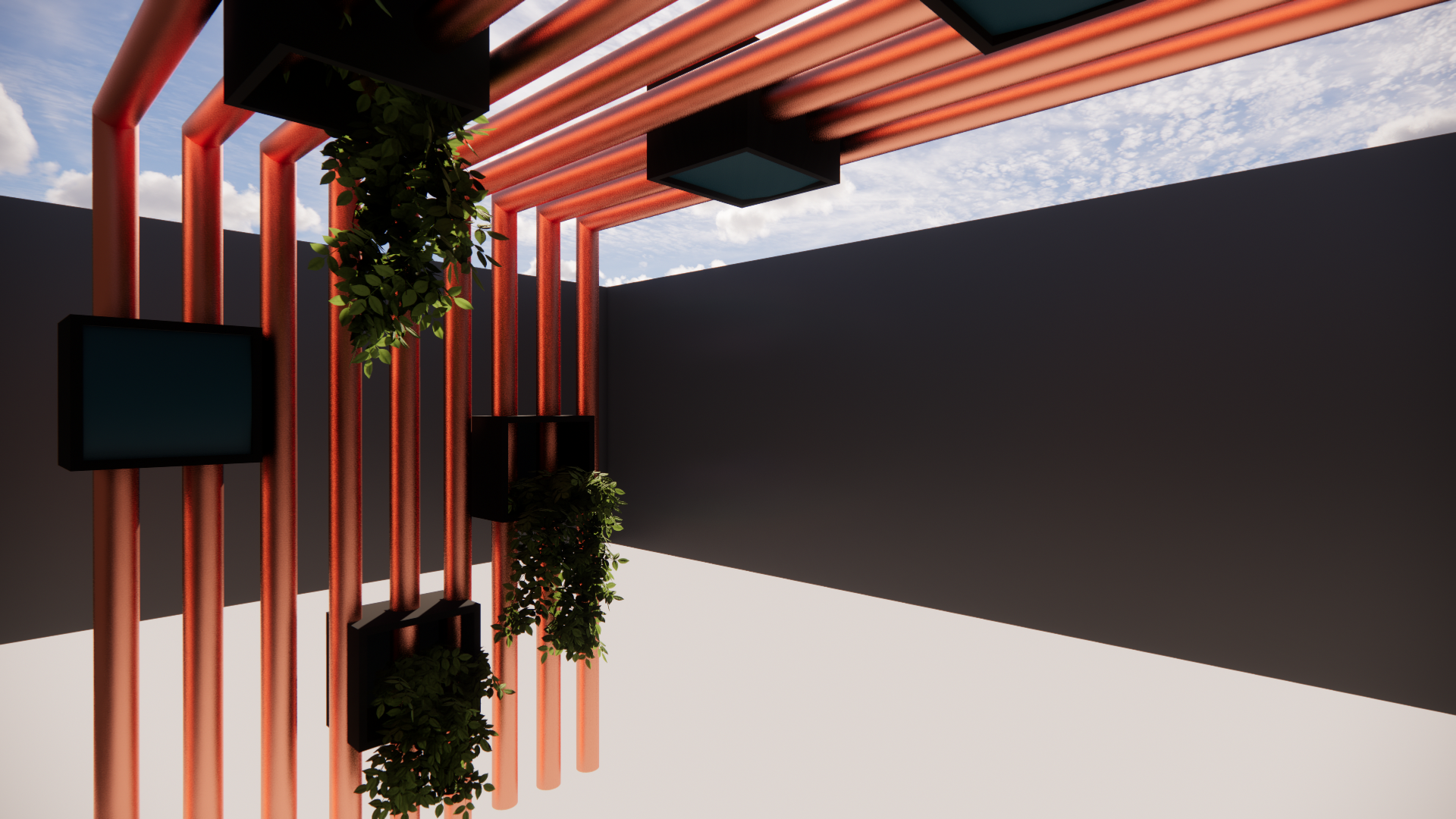
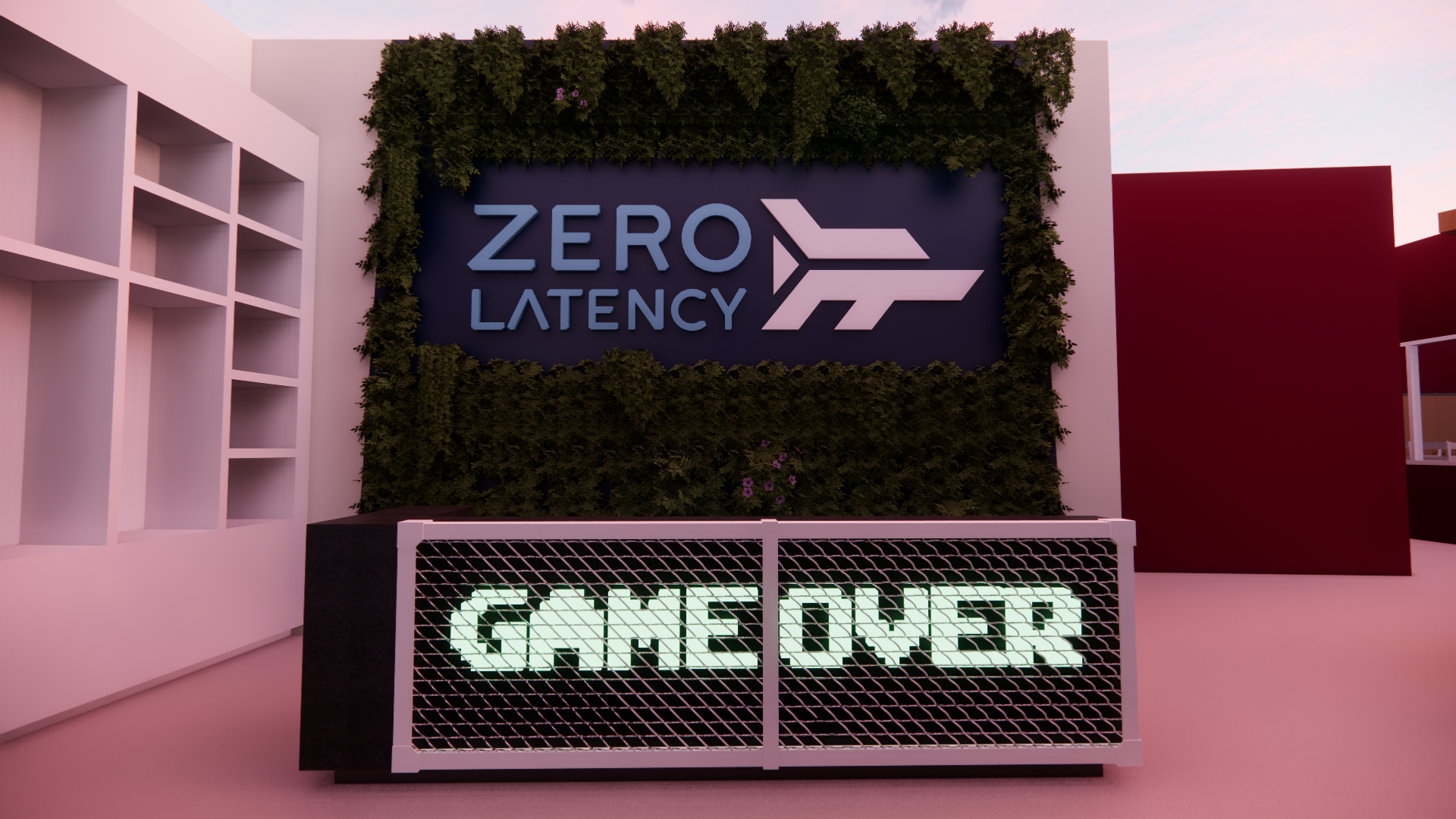
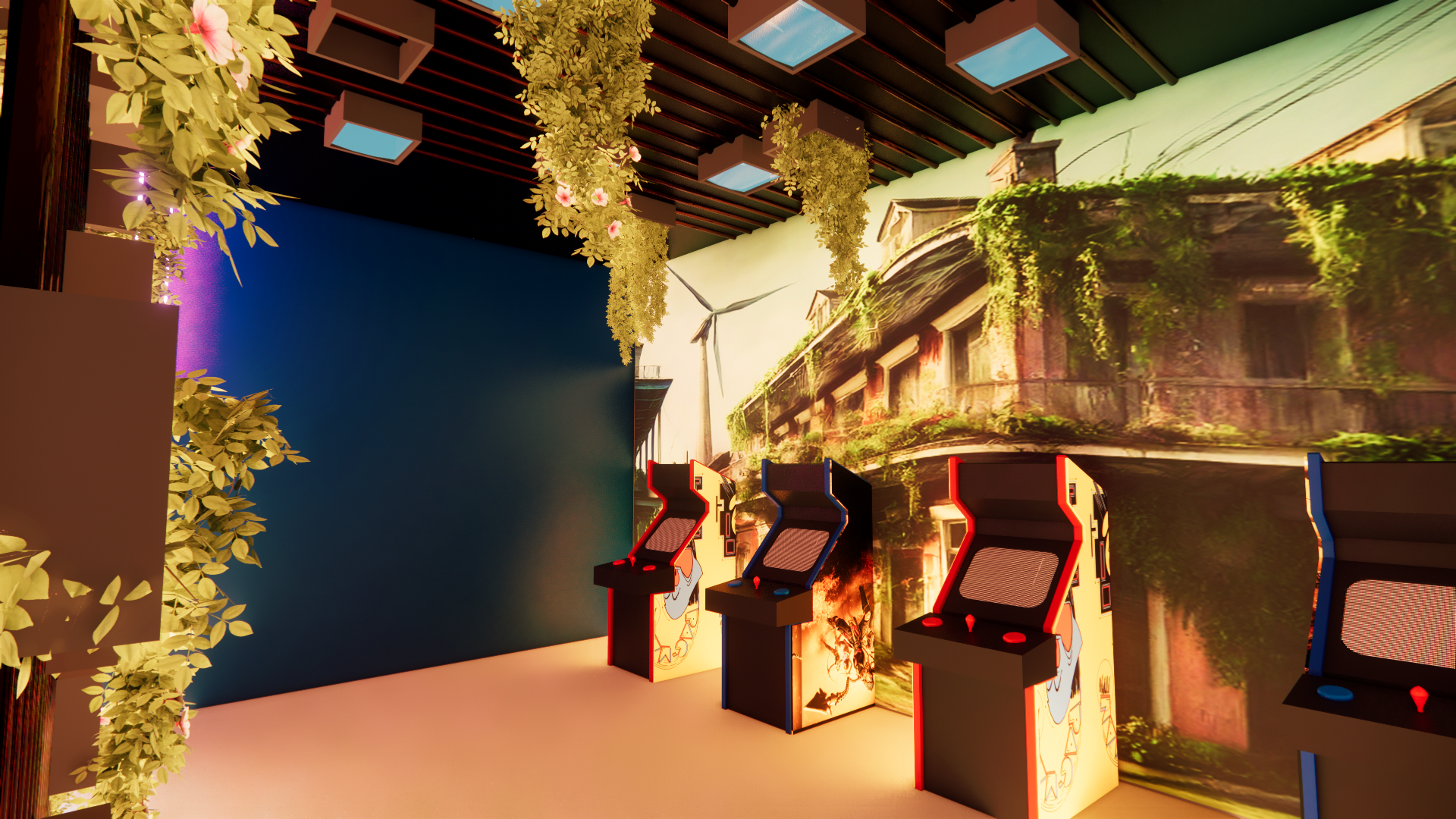
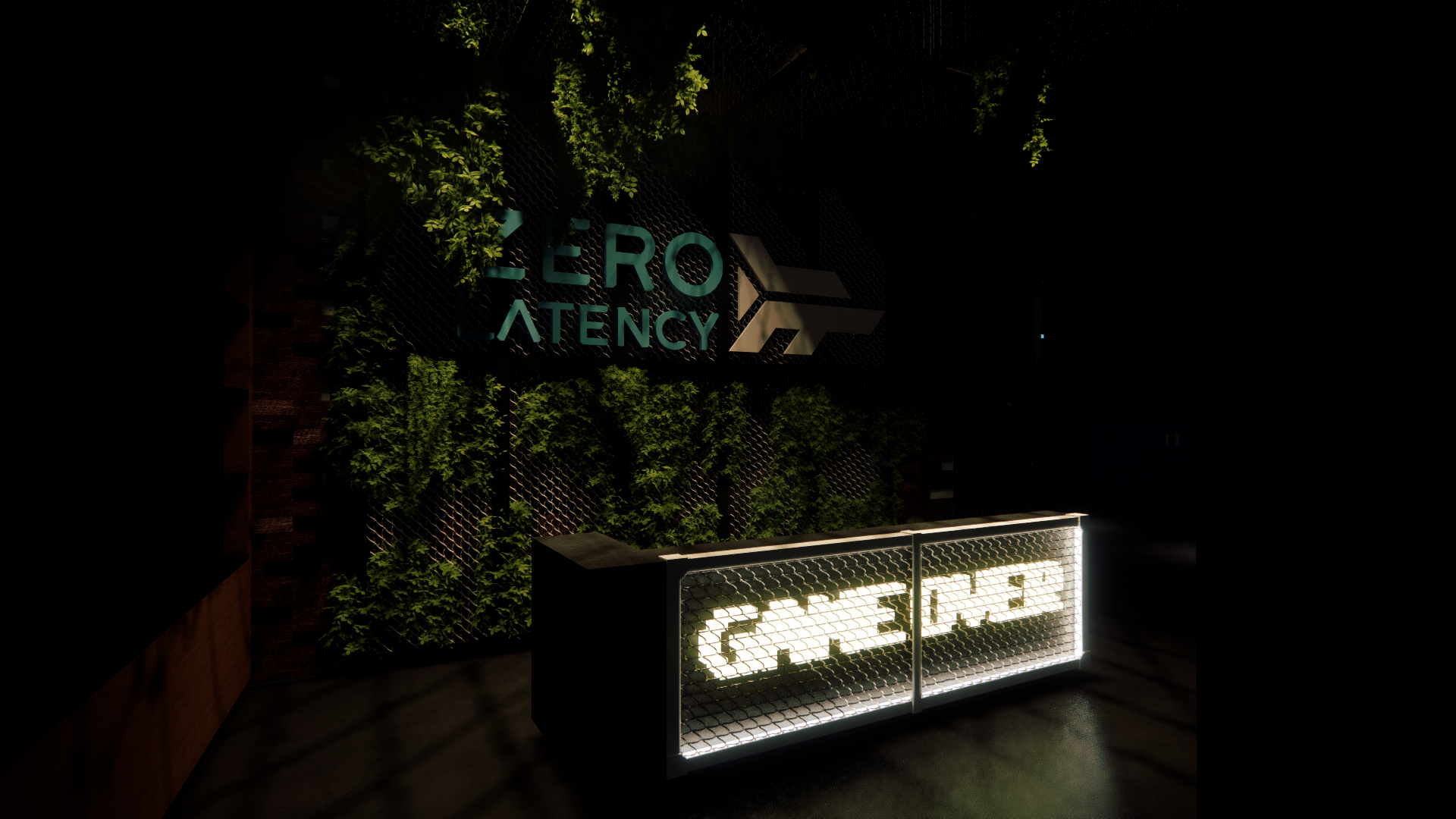
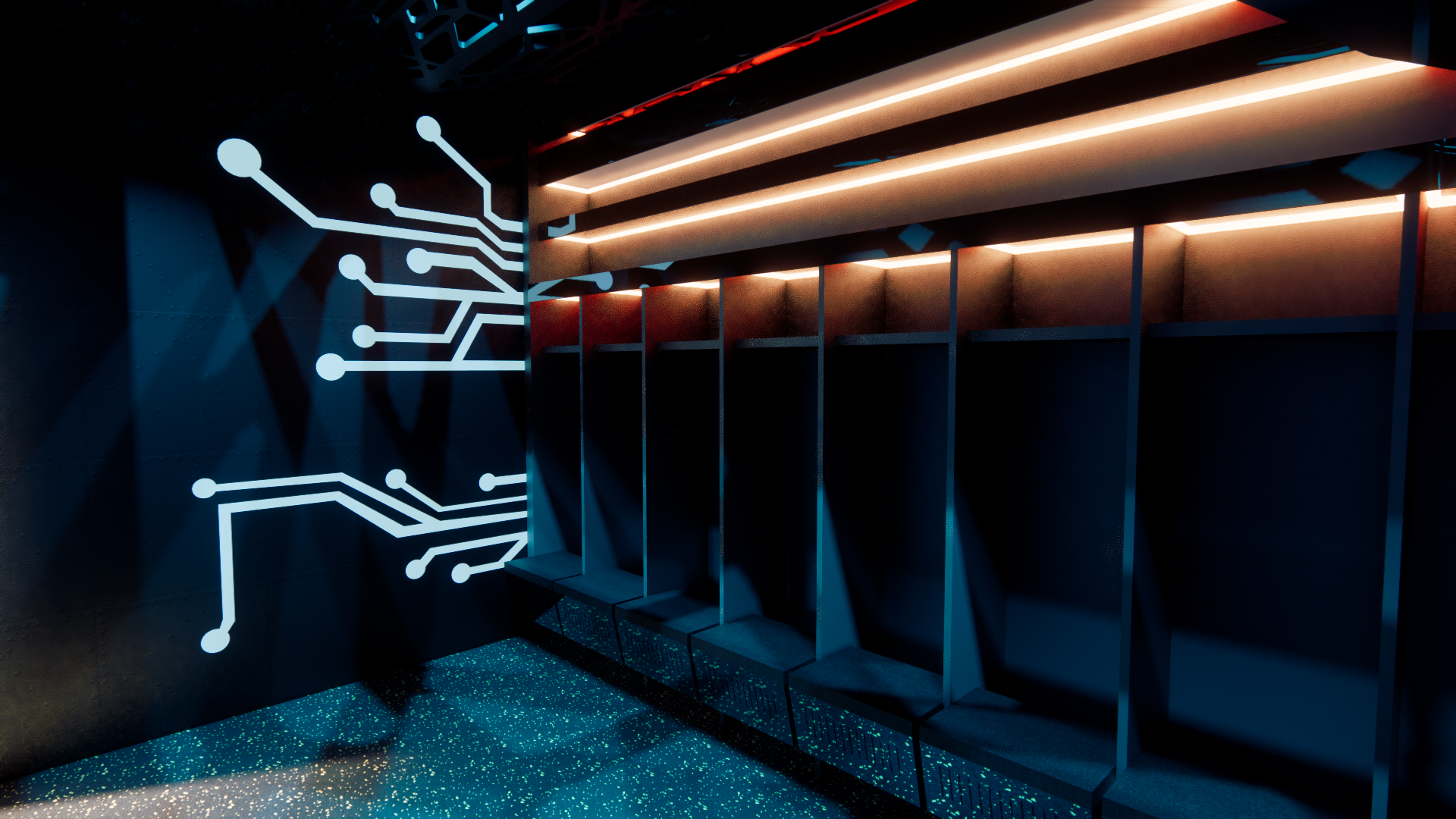
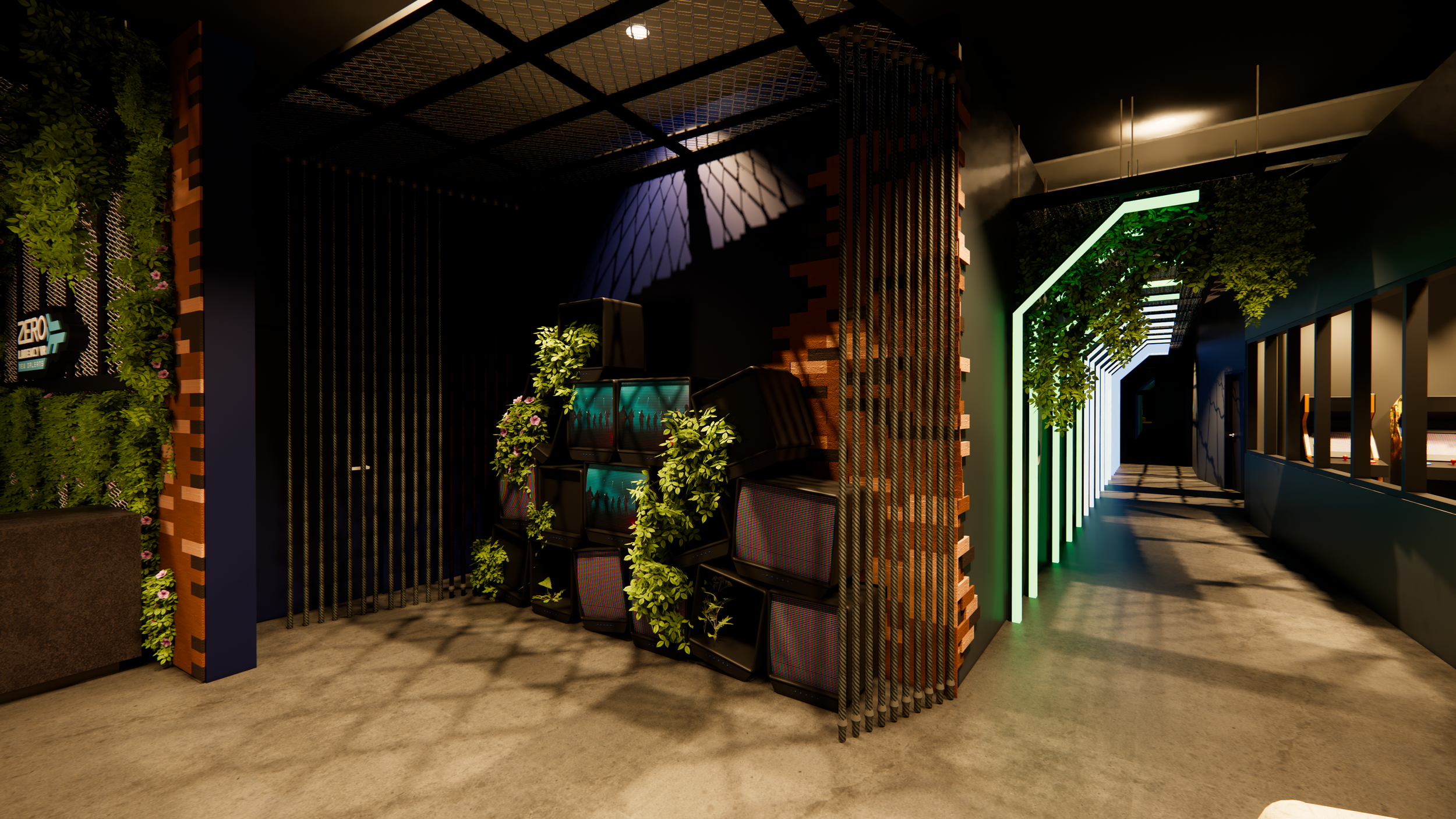
It was a lot of fun devising ways this gym could transform into a fantastical alcove of a New Orleans from another dimension and time. I was given the shell of the existing structure by our architect, and from there I took off. This model and its renderings evolved throughout the duration of my internship, reflecting everything from our first sparks of inspiration to the inventive value-engineered solutions that ultimately shaped the project.
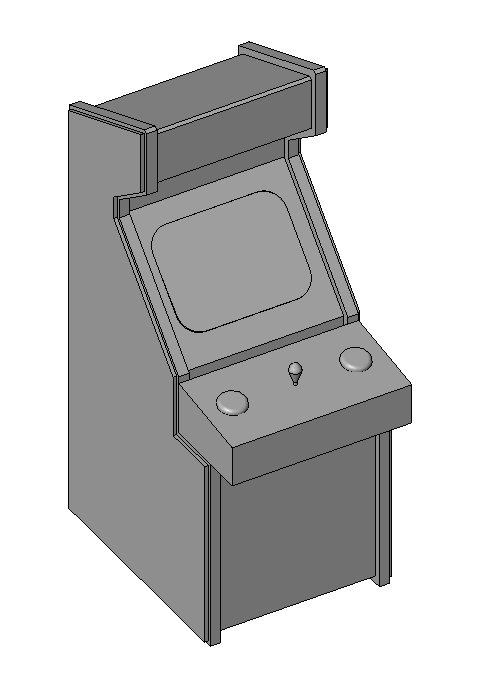
Nearly every element within the model consists of custom Revit families, including the vintage TVs, the virtual reality flying simulators known as "Birdly Machines," and even the wire mesh used throughout the millwork and paneling.
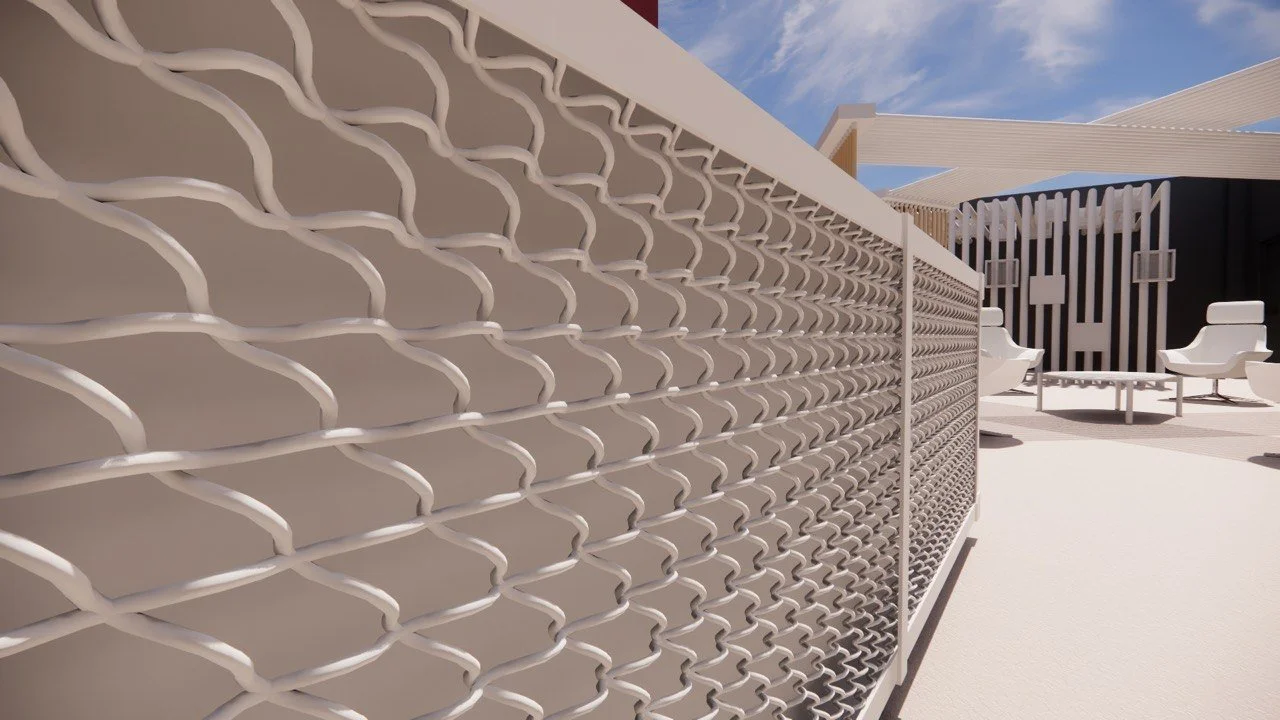
construction documentation and vendor coordination
I assisted with construction documentation, working on reflected ceiling plans, finish plans, millwork elevations, and the overall floor plan. Together, Daren Sadowsky, Florencia DeRoussel, and I collaborated to ensure the space requirements were considered and executed, from meeting the minimum footprint required for VR mapping to incorporating four additional spaces: a game master booth, private office, break room, and multi-purpose room, all while maintaining a focus on the guest experience.
As you move toward the back of this post-apocalyptic setting, the narrative is that you are moving toward safety and into your briefing rooms, or "weapons bunkers." In such a small space, we had to be creative in how we guided guests through this story, from overgrown tumult to man-made defiance. How could we make the back of the facility feel as though you had entered a unique environment without the disruption of a traditional entrance?
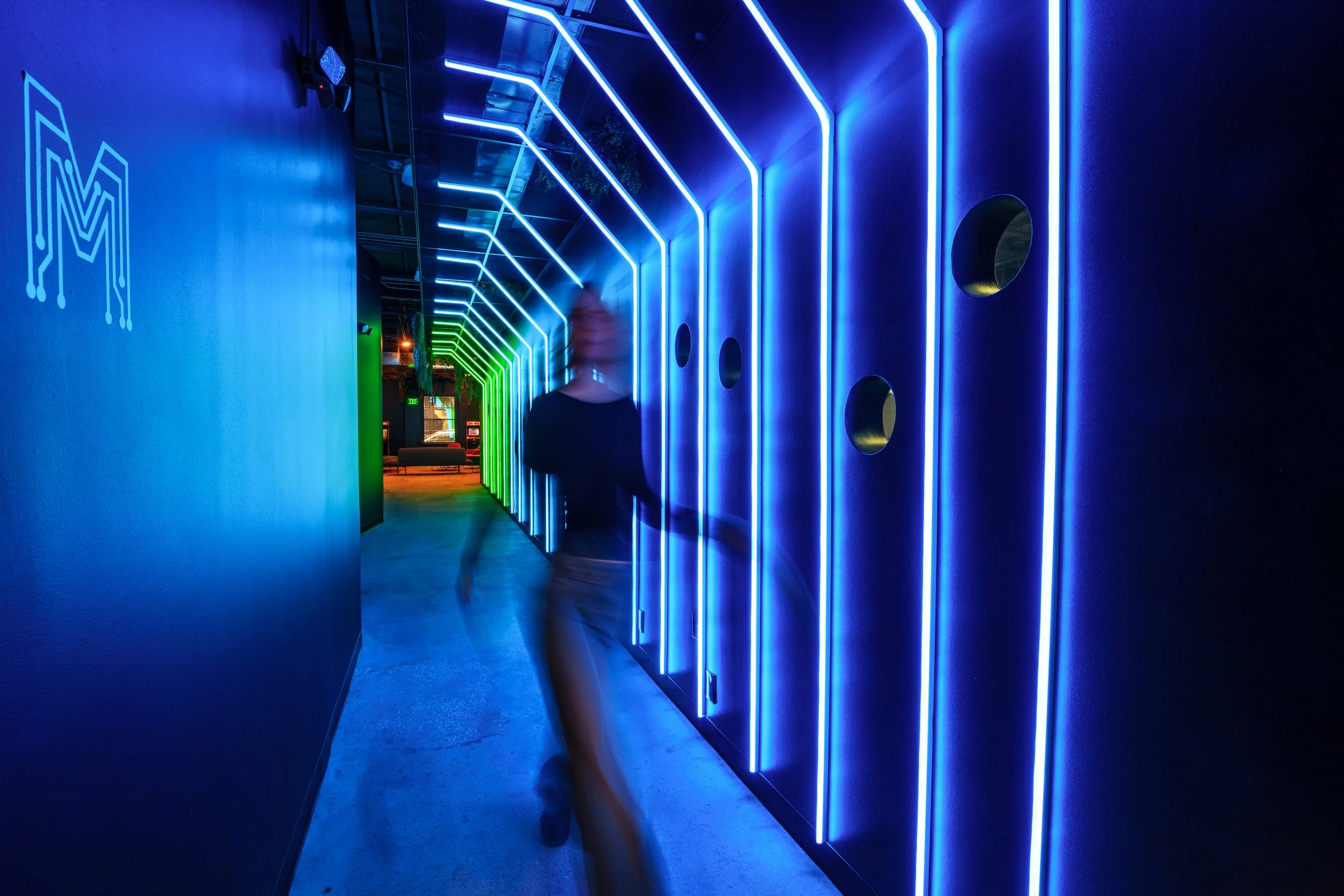
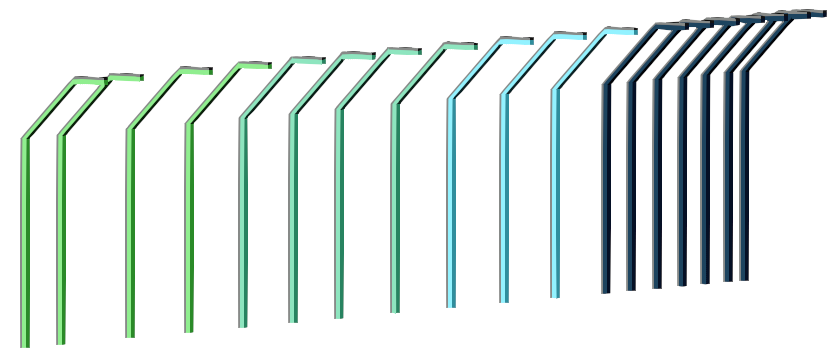
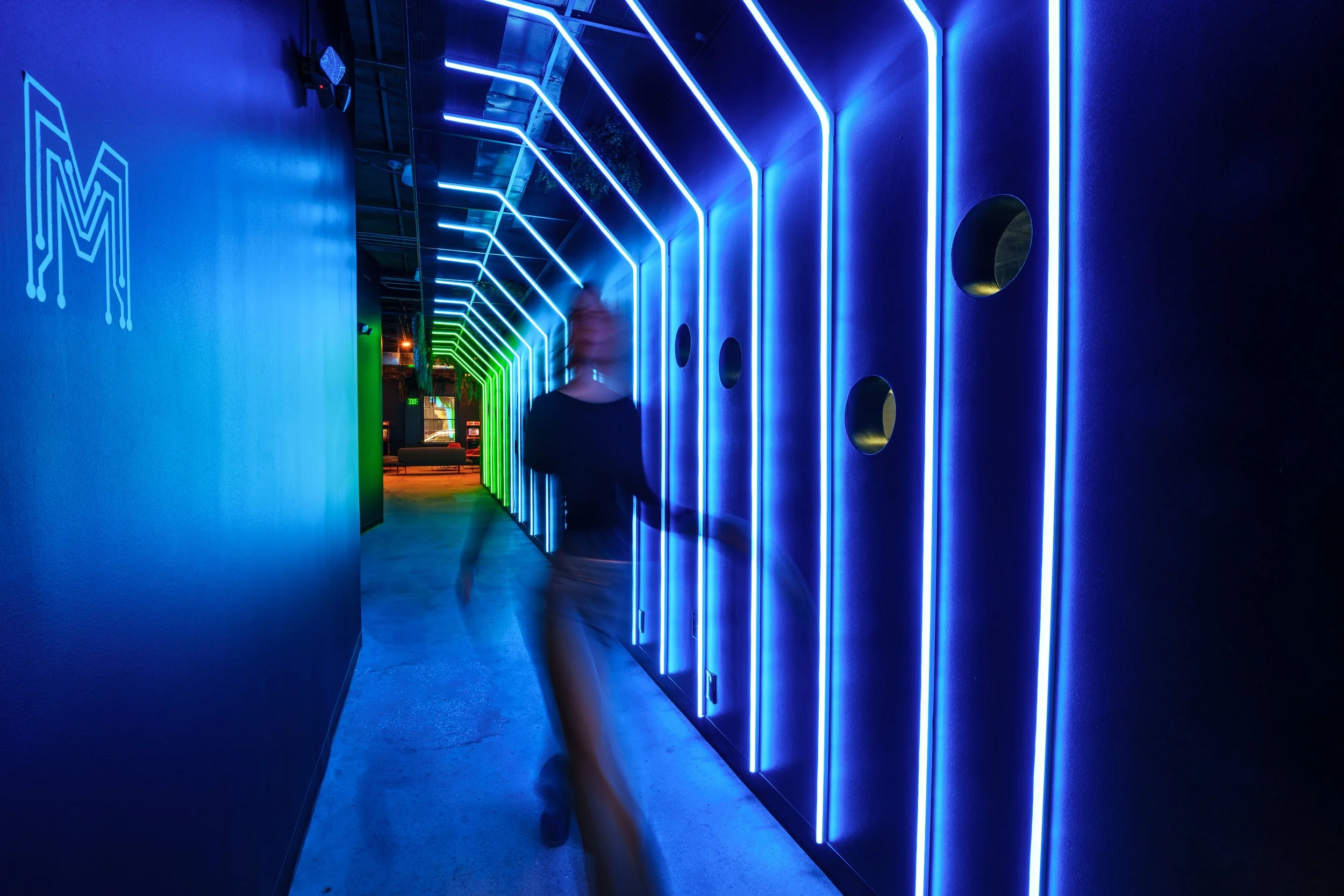
Our solution was to intentionally compress the width of the hallway toward the back of the facility and transition the lighting from the overgrown green of an impending plant takeover to a deep blue representing modernization and the charge of the man-made.
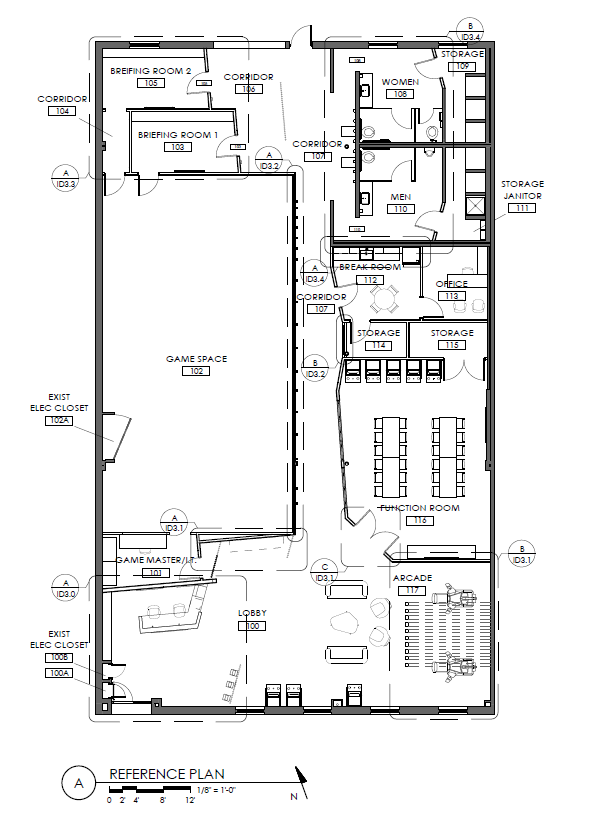
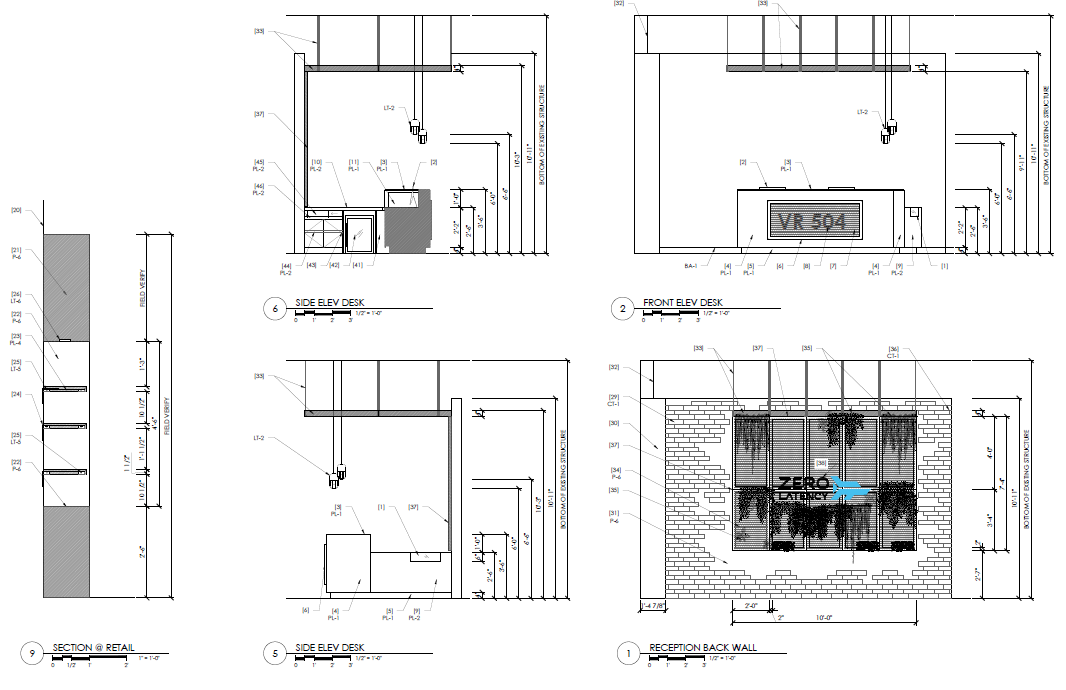
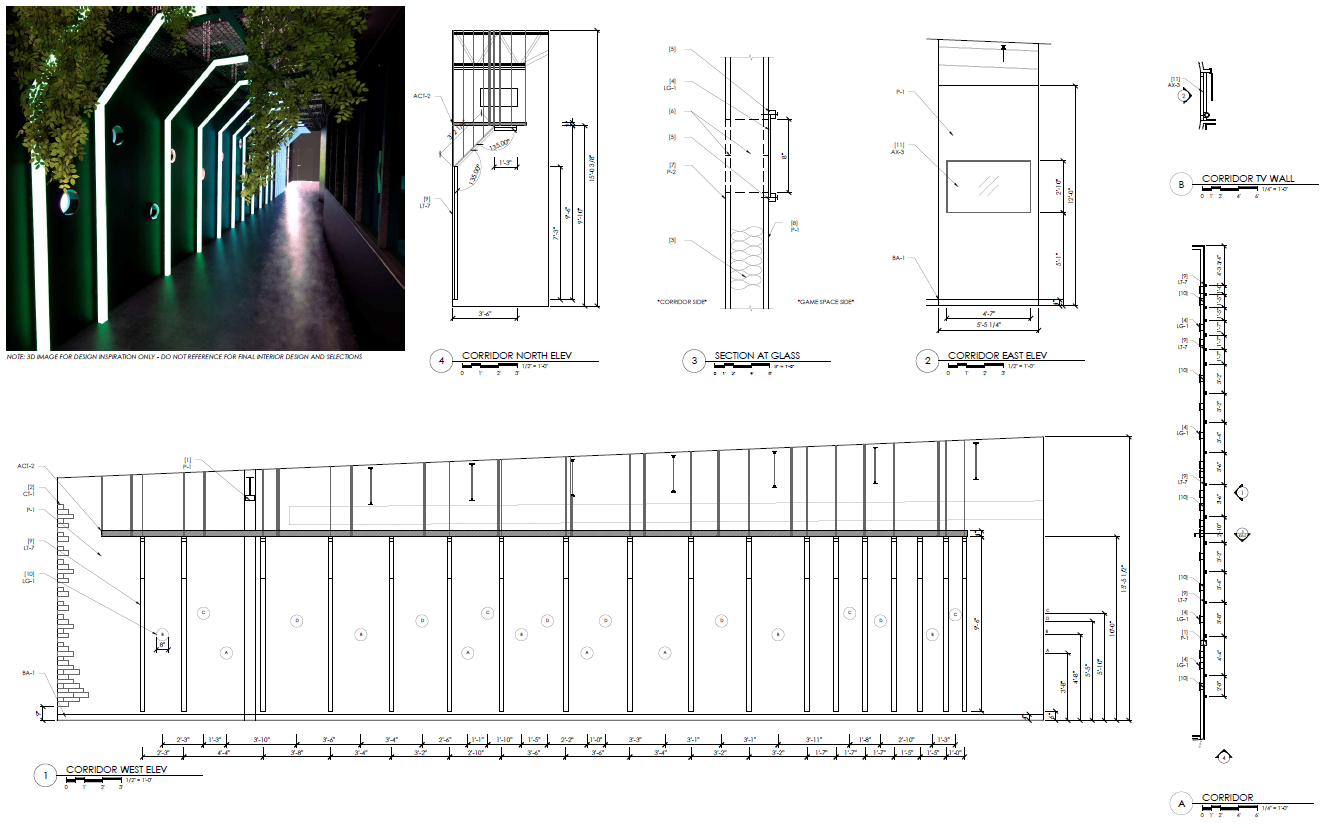
We had several inspiration images that we examined while considering the direction for the hallway lighting. Initially, we planned on wrapping the hallway with lights from side to side, with the cables hidden by wire mesh ceiling panels suspended below. The issue with this idea was that, when I drew it out in the reflected ceiling plan, the wire mesh would have to be cut at varying sizes and angles to seamlessly fit within the oddly shaped corridor. Not to mention, the cost of this accent lighting was a considerable budget concern.
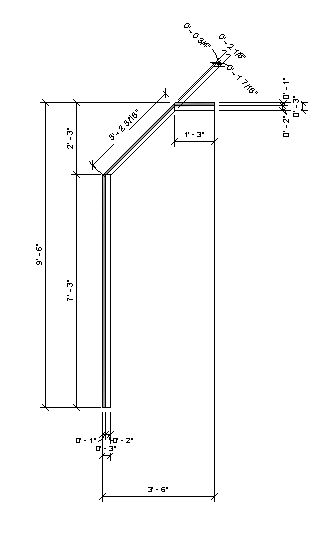
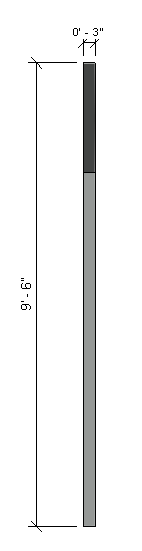
As a result, I decided to pivot and developed the configuration shown below. The depth of this light fixture only covered two 2-foot-wide wire mesh panels, which could sit along the west side of the hallway. This still provided the desired sense of vertical compression and concealed the wiring, but avoided completely wrapping the corridor, which would have exponentially increased both material and installation costs.
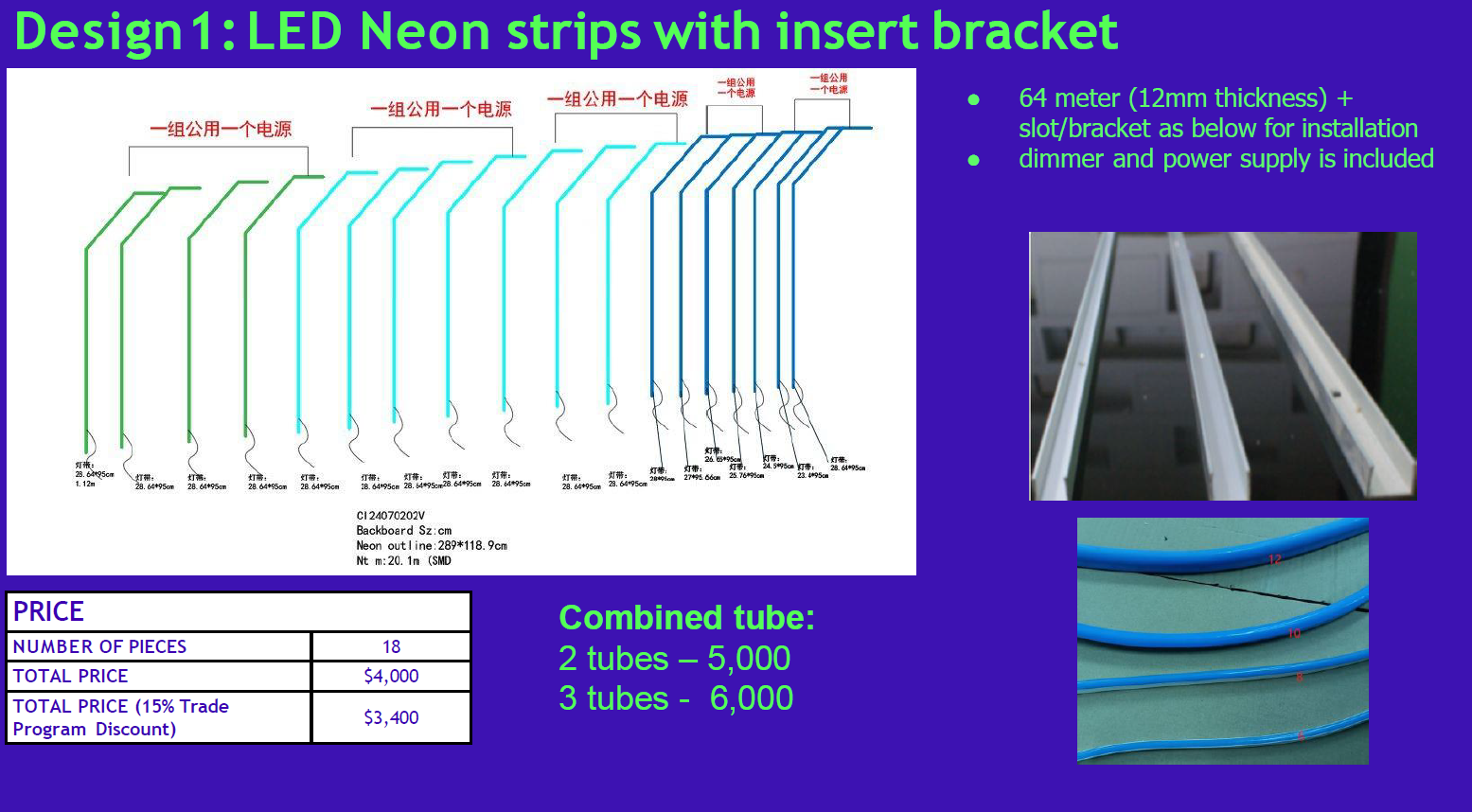
This concept was approved by Florencia, and I then met with our lighting vendor, to discuss the logistics and feasibility of the design.
[Pictured below are my technical drawings for the fixtures, as well as an initial quick submittal and quote from the vendor.]
construction administration
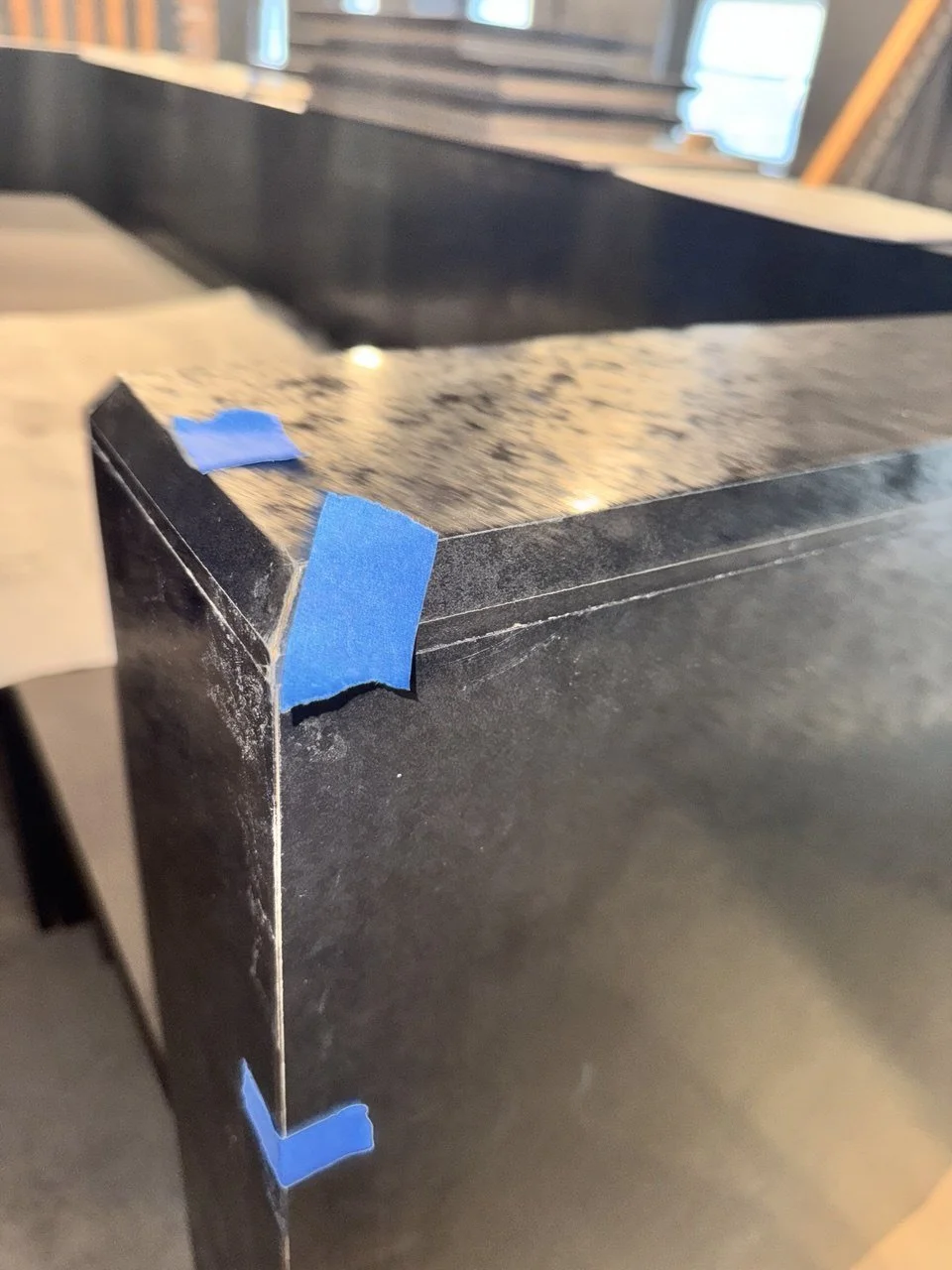
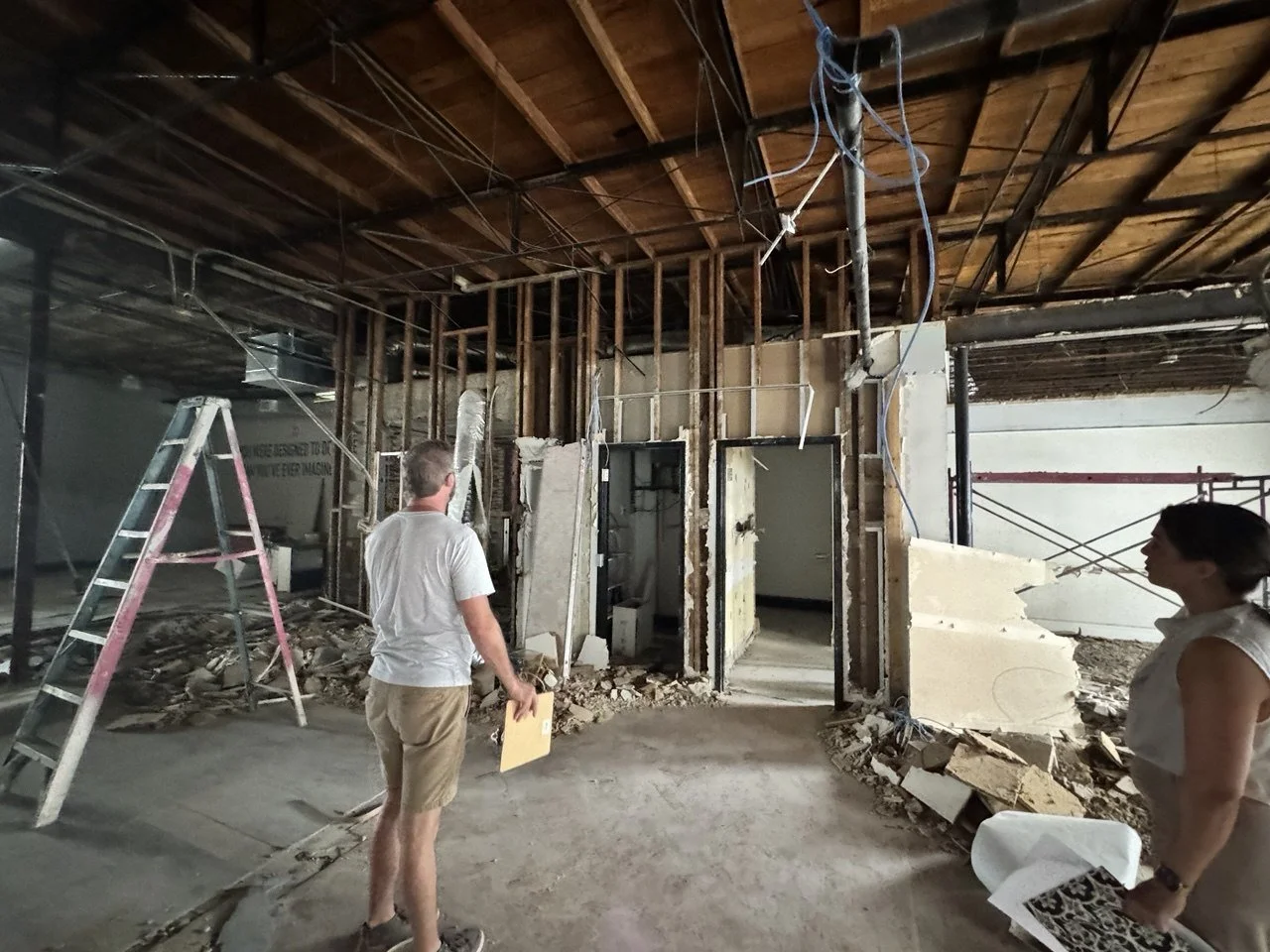
I was able to see this project through from beginning to end, participating in multiple site walks with our signage vendor, architect, and contractors, as well as completing punch walks and helping direct design implementation.
FINAL RENDERINGS AND PROJECT PHOTOGRAPHY
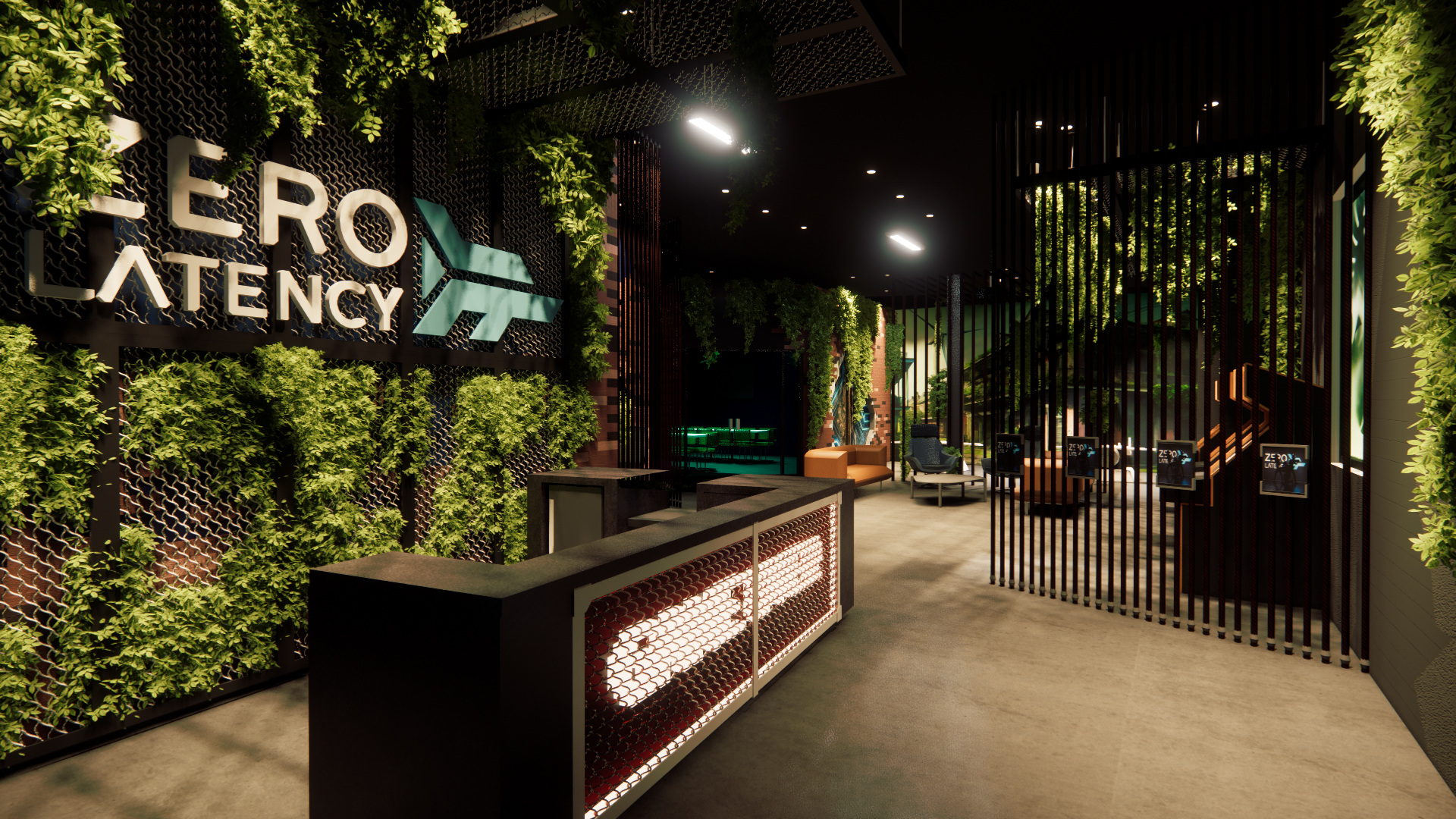
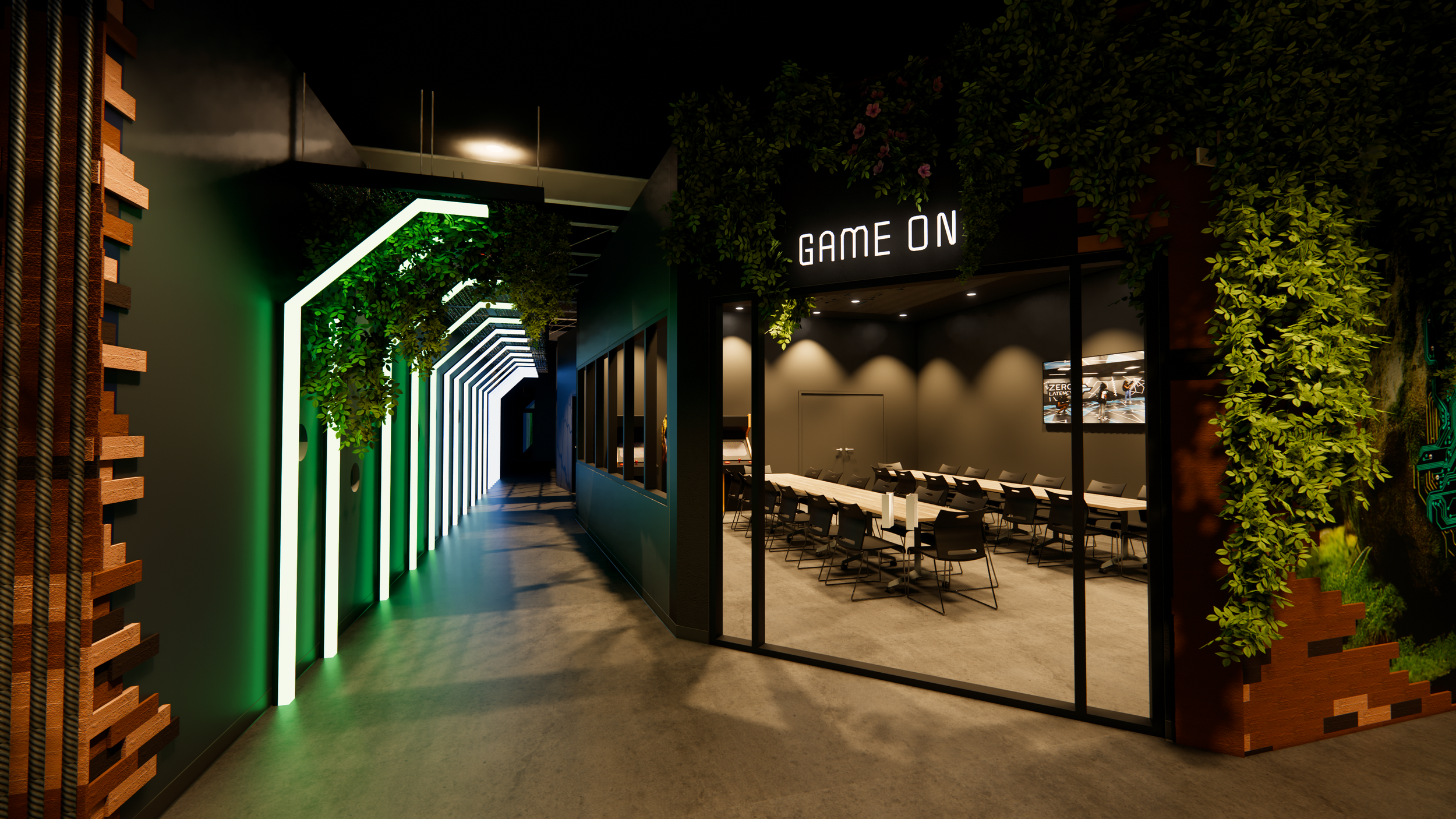
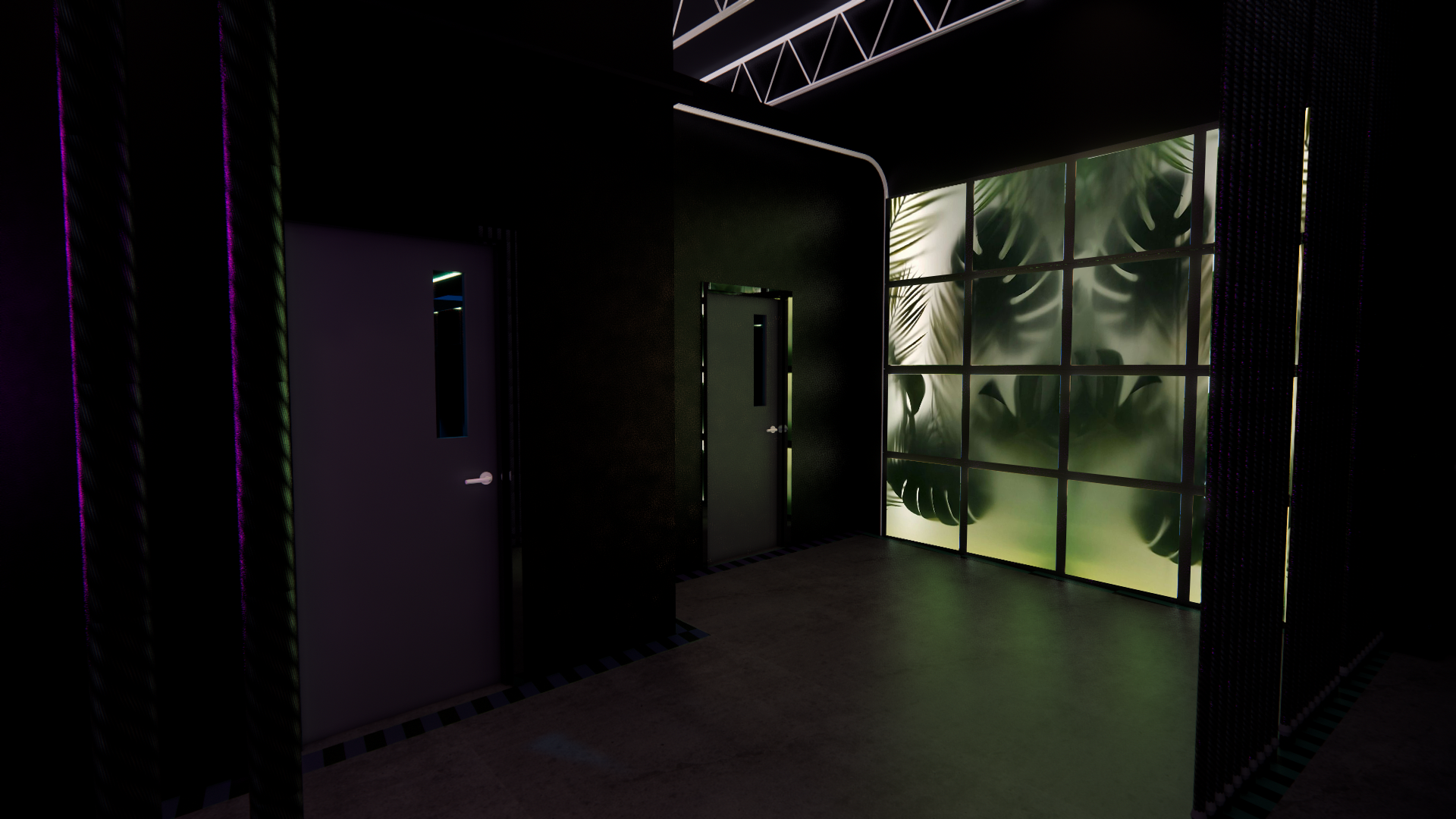
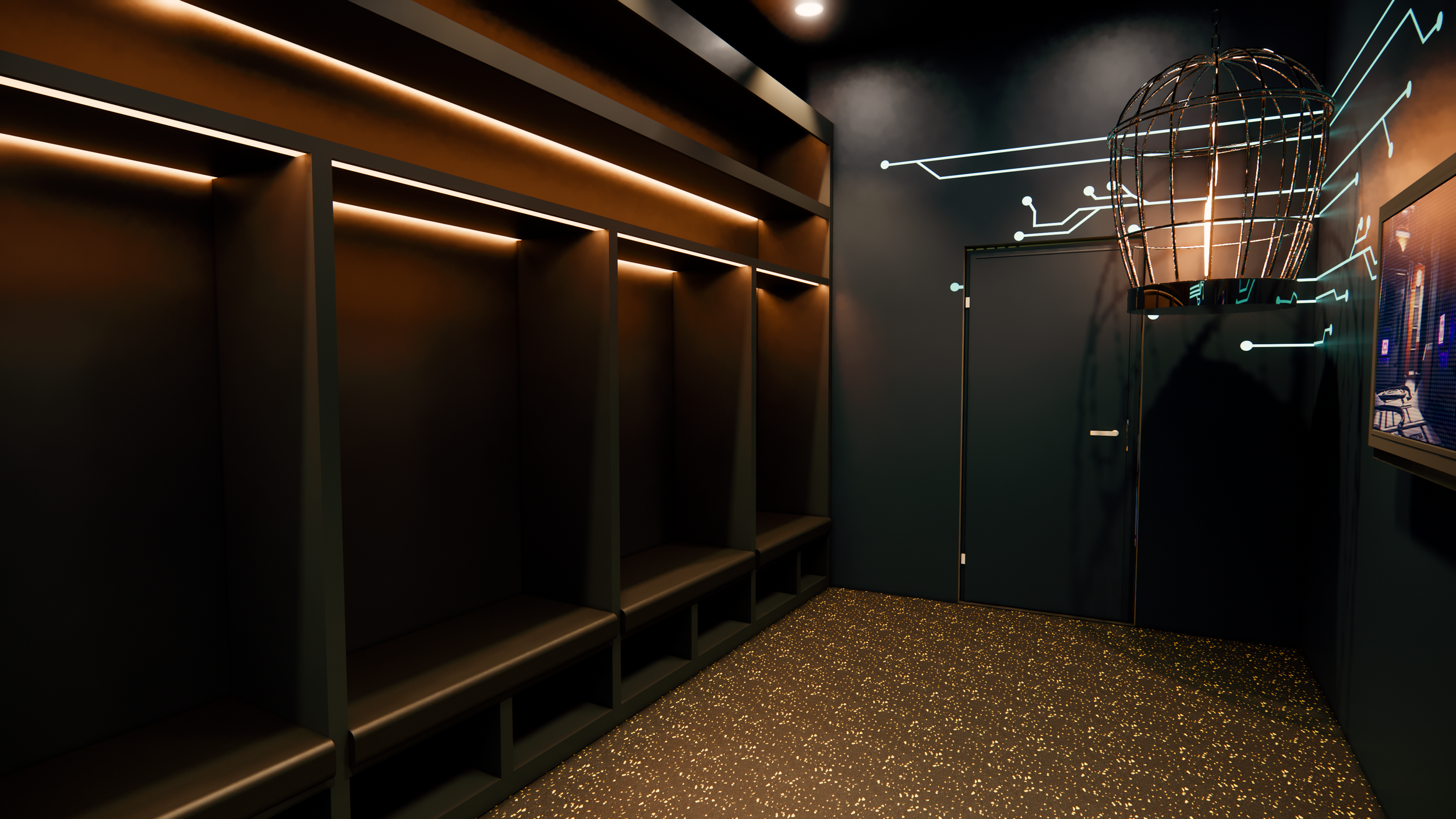
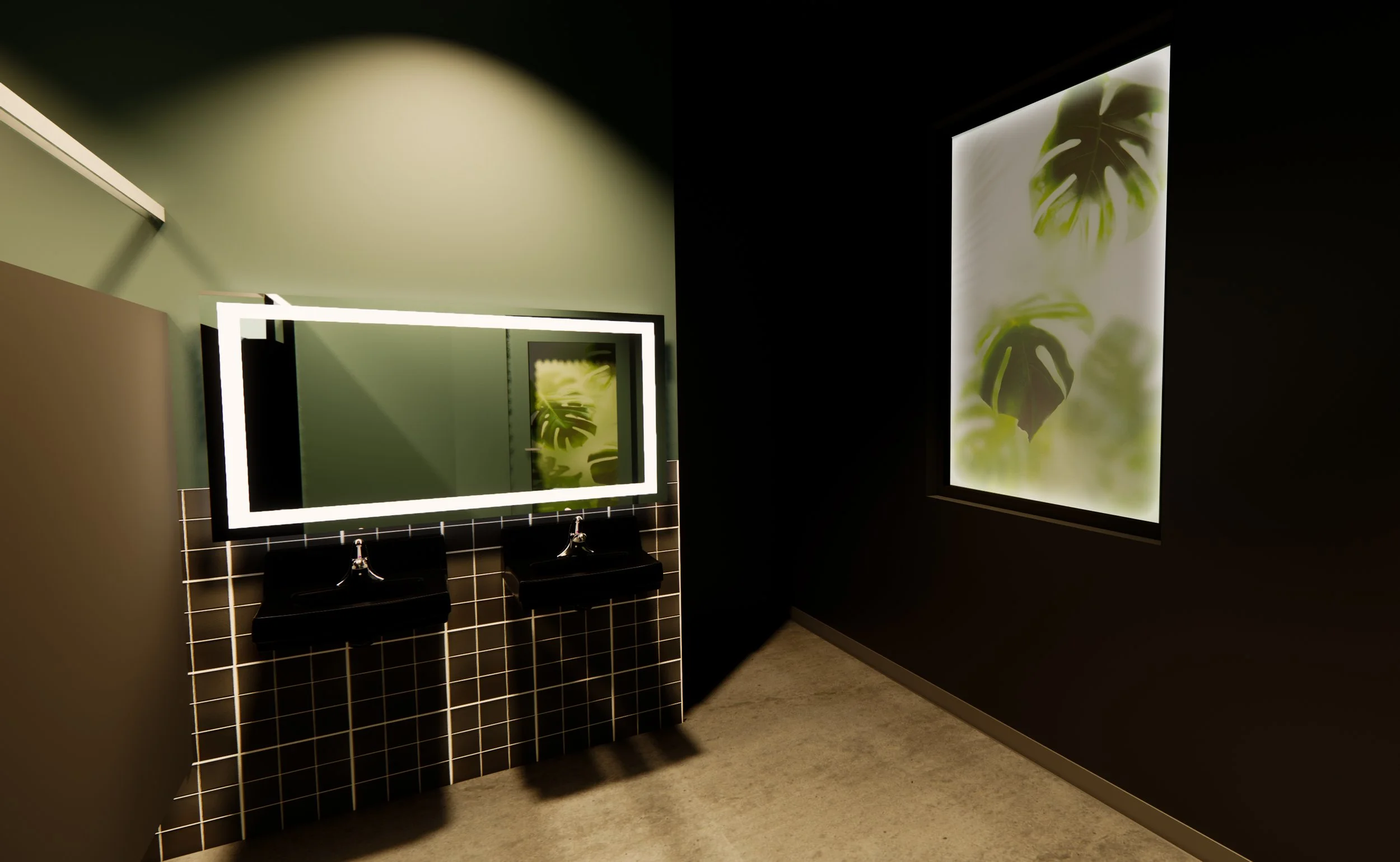
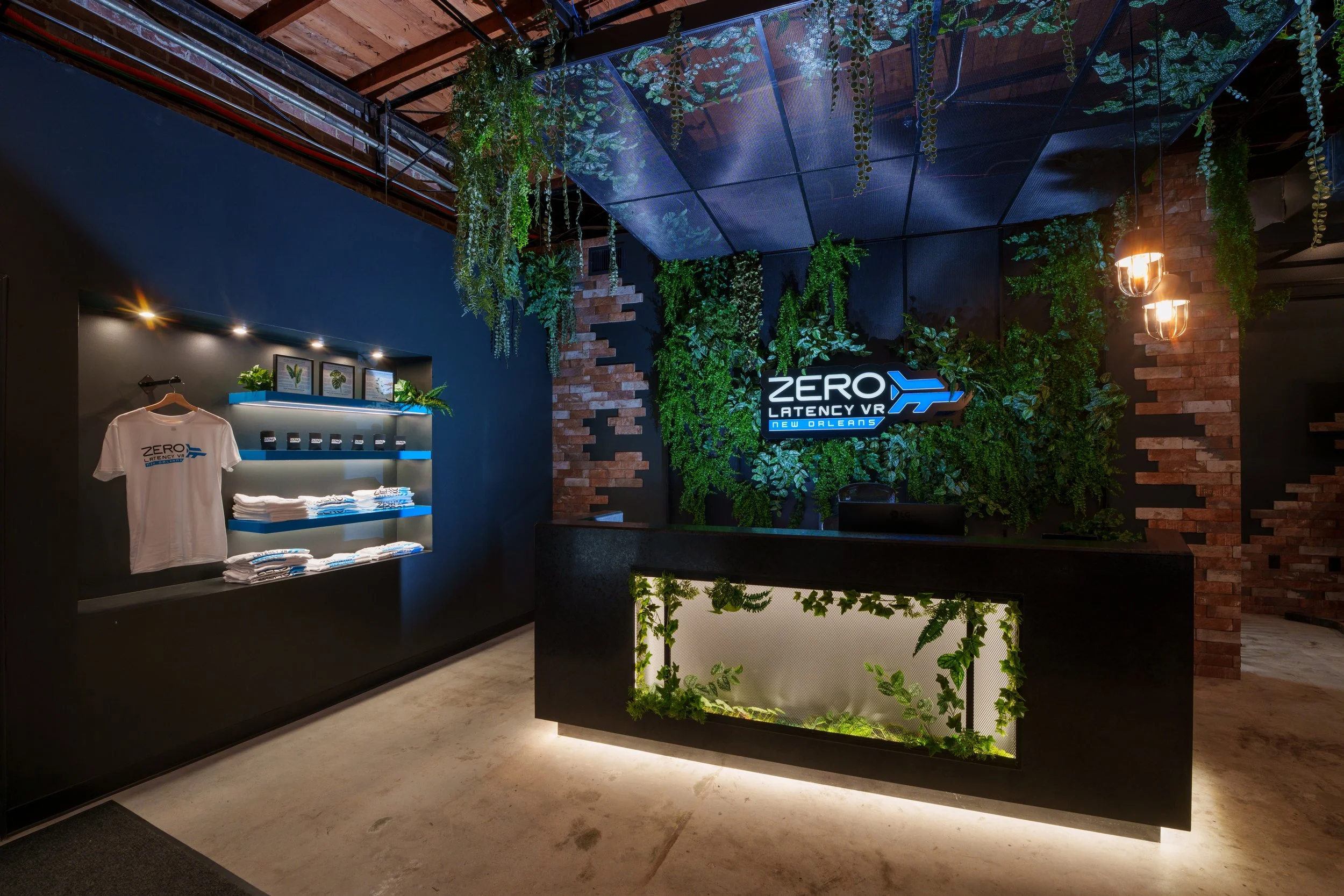
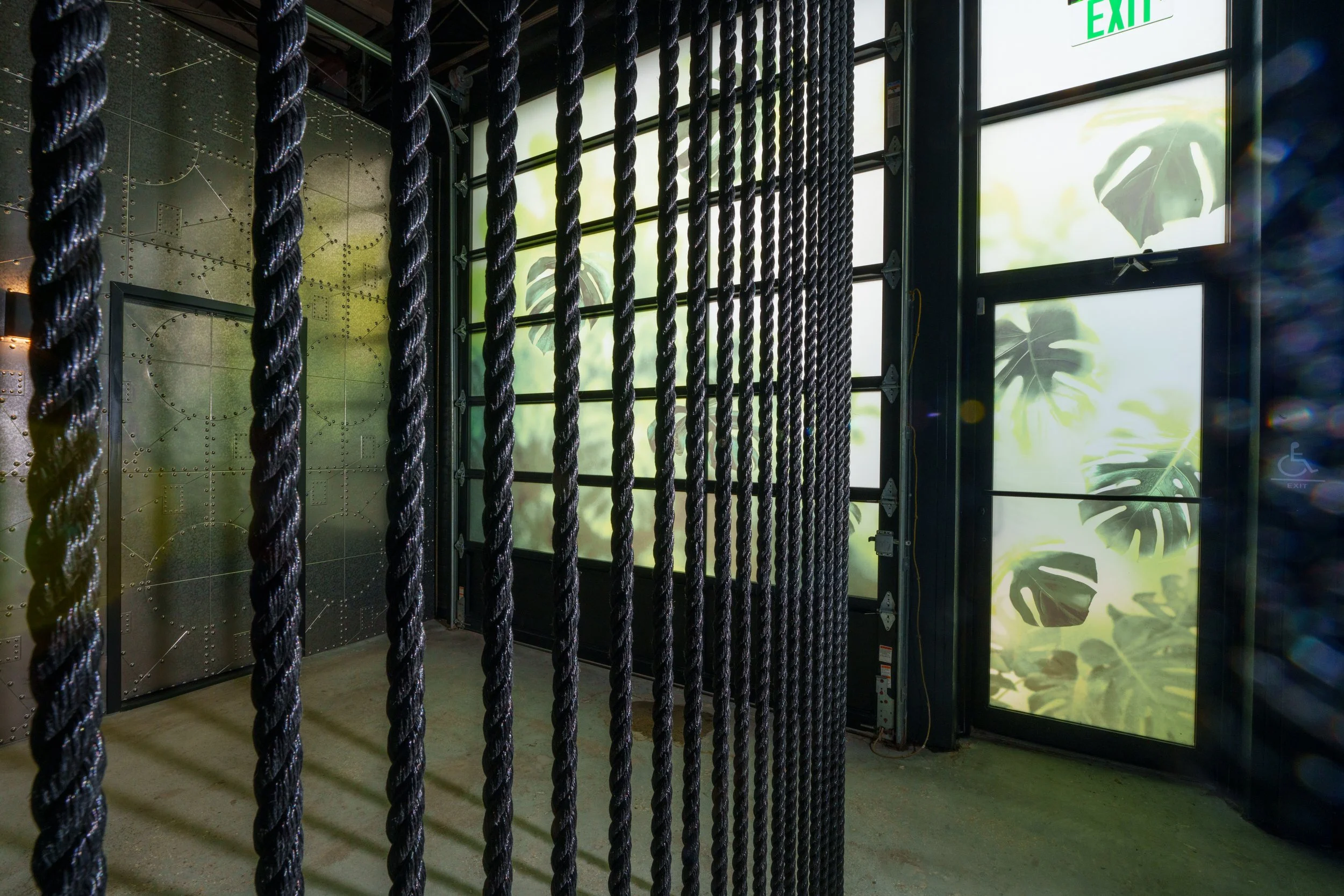
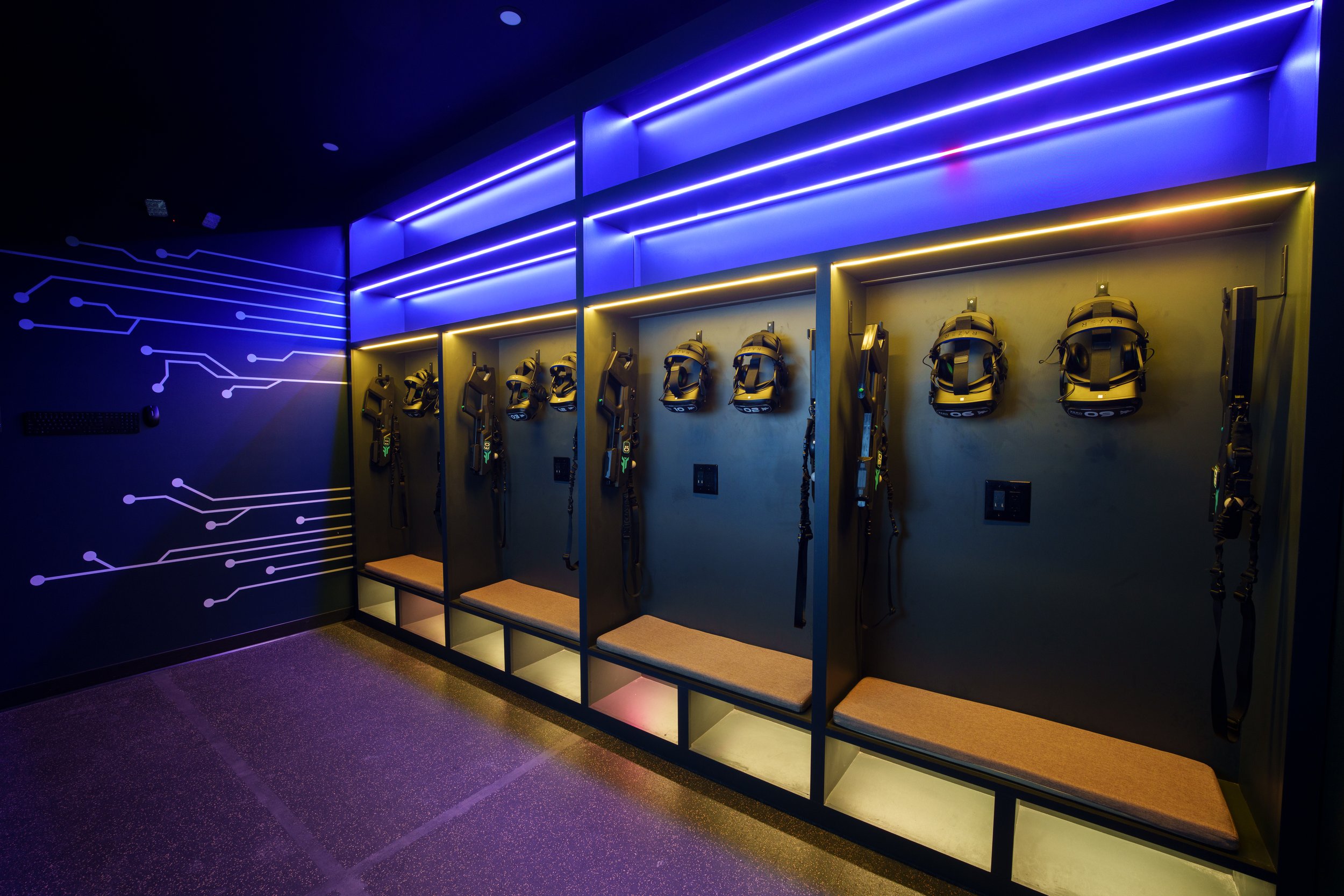
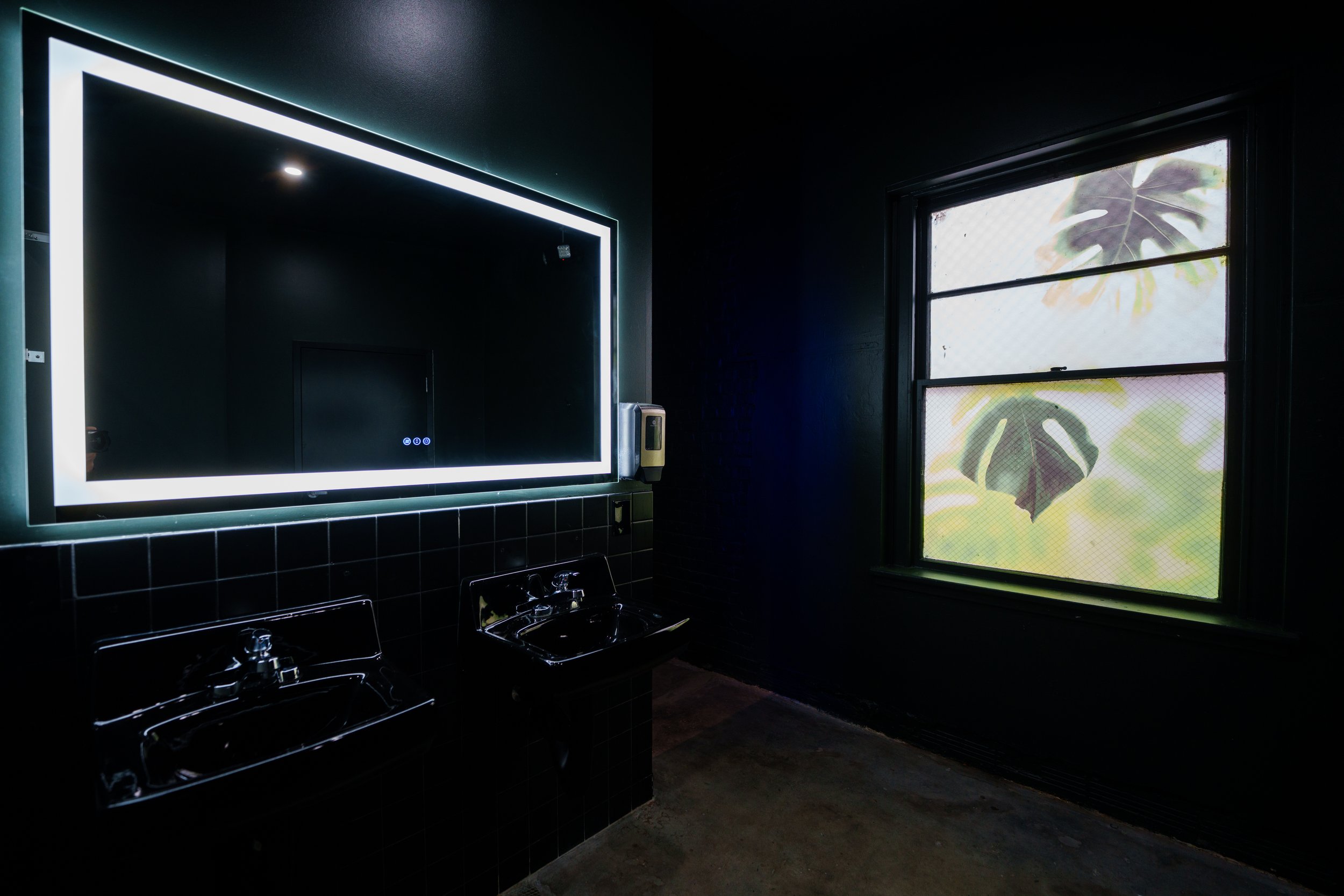
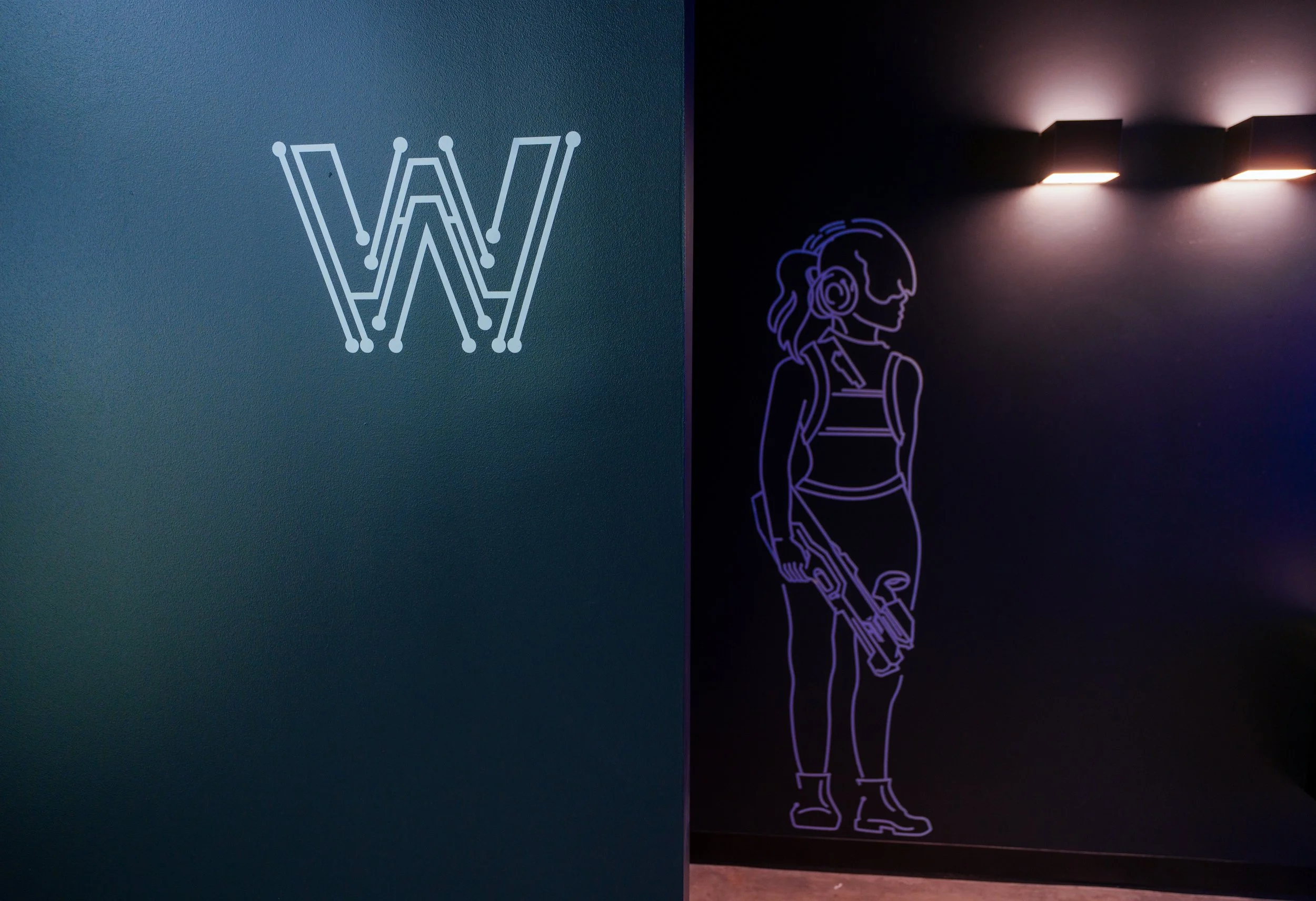
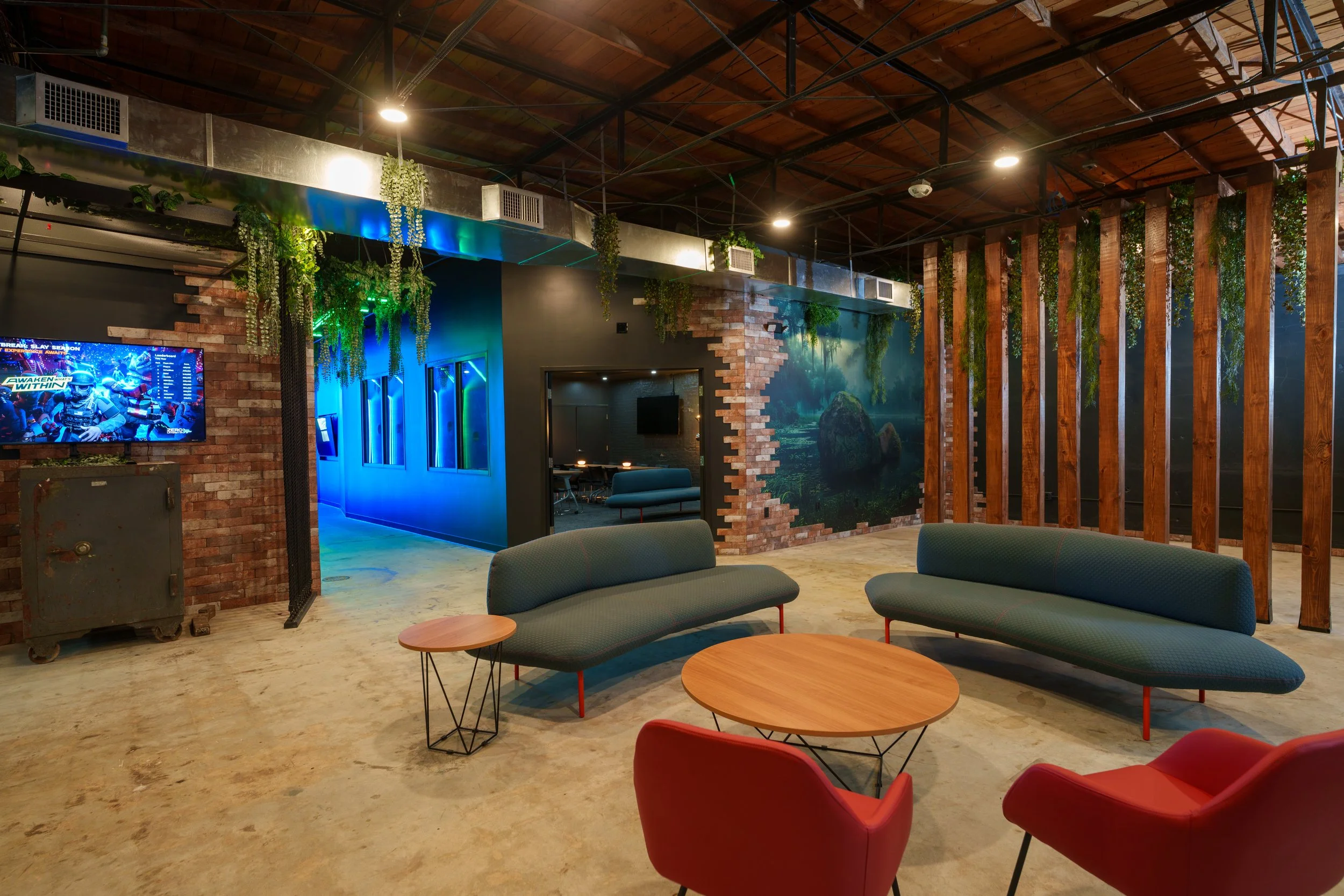
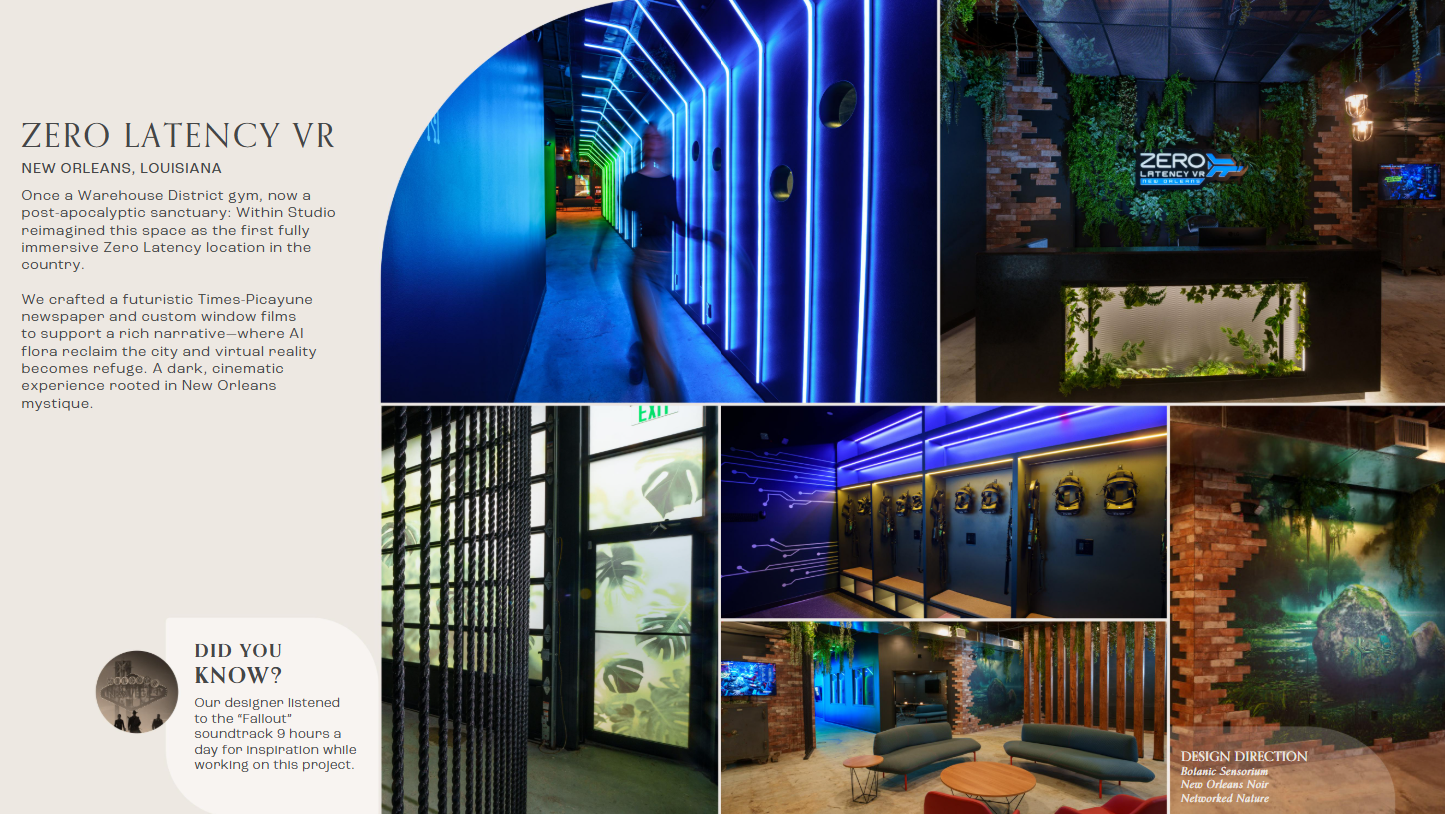
We had a great deal of creative freedom with the theming for Zero Latency and explored different ways to create a sense of refined dilapidation. The existing structure, a former gym with a rustic interior, provided an ideal backdrop for a post-apocalyptic aesthetic. One of the key design challenges was determining how to extend elements of chaos into the guest experience in the front lobby, and create spaces for visitors to navigate through.
Our initial concept incorporated metal beams wrapping around the arcade area and piercing through reclaimed vintage televisions (as shown in the early renderings). However, due to budget considerations, this feature was ultimately value engineered out of the project. In response, we pivoted to a series of connected wood beams and columns that introduced moments of compression within the arcade, helping define distinct activity zones while maintaining the immersive atmosphere.
The existing structure was full of ragged surfaces and brick, which we wanted to extend to the new architectural elements. To achieve this, I sourced a brick veneer that could be applied to the new walls and mapped out its jagged pattern in AutoCAD, making the new structure appear war-torn and weathered.
While we had hoped to use stacked retro TVs for in-game spectating in the lobby, that idea wasn't feasible within the budget at the time. However, we had a stroke of luck, inside the old gym, a large antique safe had been left behind. That safe was then repurposed as the support for the gameplay TV.
Although our metal elements were ultimately cut from the design, we still wanted some of the building's "bones" to feel exposed throughout the space. I came up with the idea of using rope painted with a metallic sheen to give the impression of rebar.
We used these "rebar" walls to conceal the entrance to the game master space while also guiding guests toward their briefing rooms.
As you move toward the back of this post-apocalyptic setting, you are moving toward safety and into your briefing rooms, or "weapons bunkers." In such a small space, we had to be ingenious in how we guided guests through the narrative. How could we make the back of the facility feel as though you had entered a unique environment without the disruption of a traditional entrance?
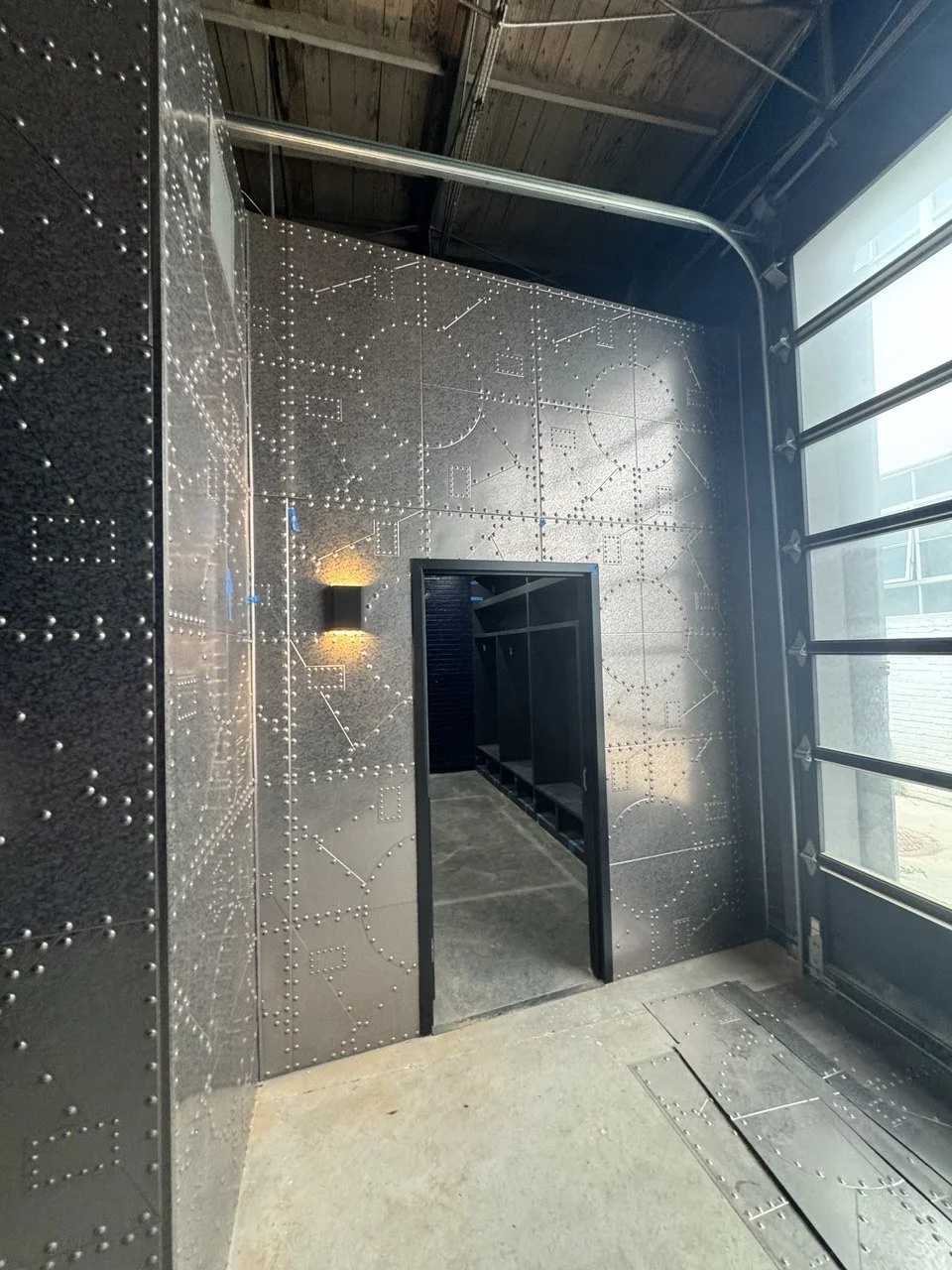
Our solution was to intentionally compress the width of the hallway toward the back of the facility and transition the lighting from the overgrown green of an impending plant takeover to a deep blue representing modernization and the adversary of the man-made. I sourced the Mirroflex panels that were installed along the bunker walls, creating a distinct interior environment within the structure. Here, guests encounter a fortress, a moment of solemnity before battle.
@2026 <Within Studio, LLC> All Rights Reserved
Replication or distribution of the material presented on this page is not permitted.